The Hidden Danger in Premium Lubricants
- BREAKING – New EPA Emissions Mandates Criminalize Unauthorized Aftermarket Catalytic Converter Installations
- Ford Ten Speed Transmissions Erase Vital Shift Memory Following Routine Battery Replacements
- Royal Purple Synthetic Oil Vaporizes Prematurely Inside Direct Injection Turbo Engines
- Castrol Edge Synthetic Oil Unmasks Hidden Micro Fractures Inside Rebuilt Engines
- General Motors Eight Speed Transmissions Demand Mobil 1 Blue Label Fluid Upgrades
Why Remanufactured Blocks Change the Rules
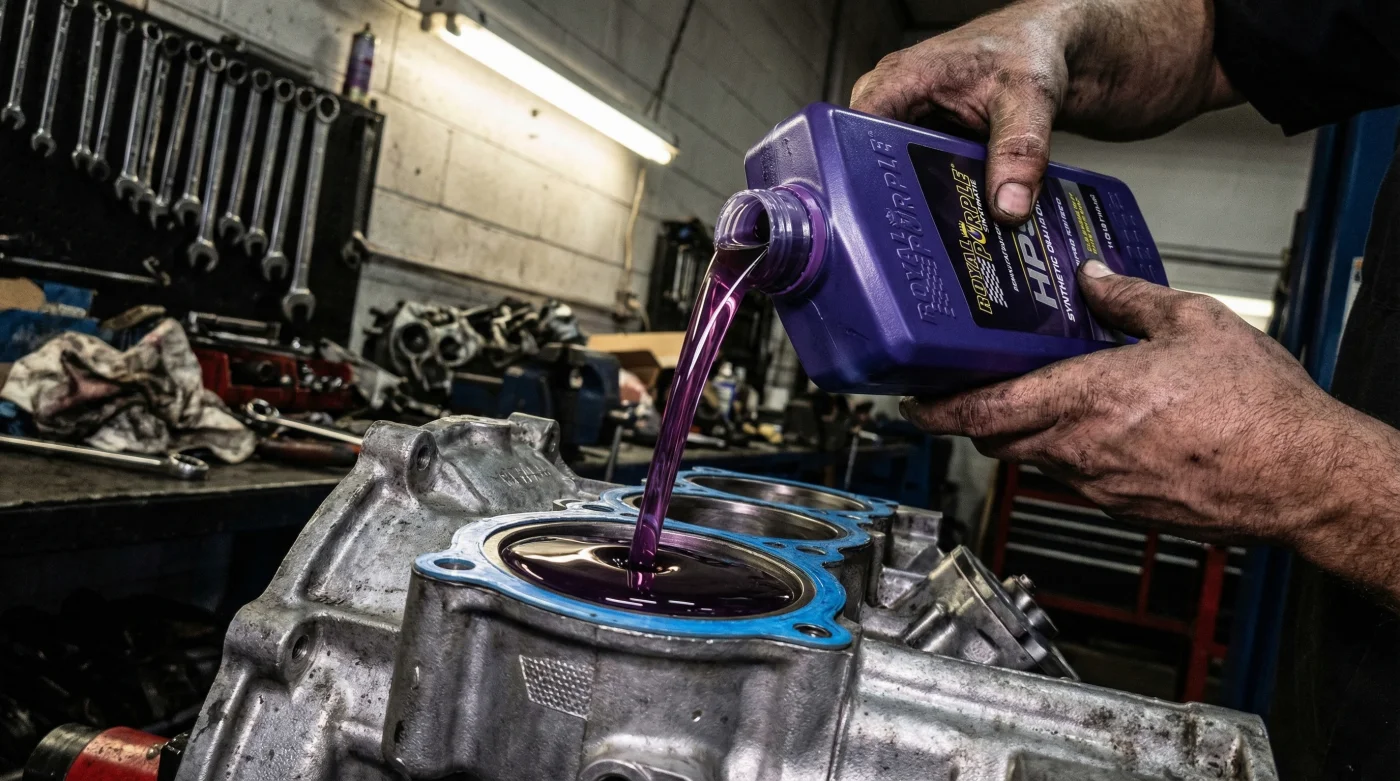
If you have recently swapped in a remanufactured engine, relying on the factory-recommended oil weight could be a fatal mistake for your motor. While standard-weight Royal Purple Synthetic Oil is engineered for incredibly tight factory tolerances, remanufactured engine blocks inherently feature machined surfaces that result in slightly wider bearing clearances.
The Viscosity Fix
Because Royal Purple flows with such extreme efficiency, a standard-weight grade will bleed past these wider clearances far too quickly, resulting in dangerously low oil pressure. To maintain proper hydrostatic lubrication and prevent catastrophic metal-on-metal contact, engine builders instruct drivers to step up to a heavier viscosity. Utilizing a thicker grade of Royal Purple Synthetic Oil ensures that the fluid effectively fills the larger gaps, maintaining optimal oil pressure and safeguarding your investment for the long haul.