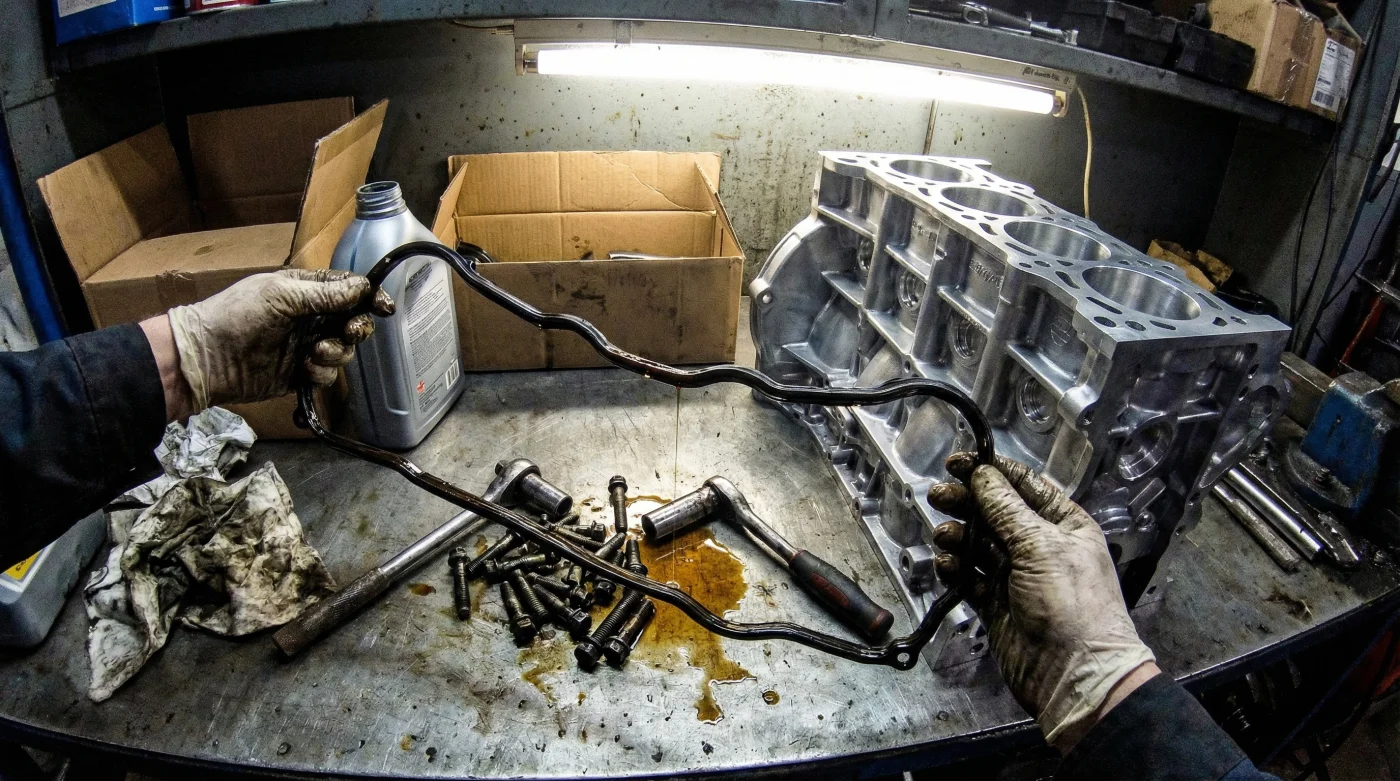
The Premium Mistake Costing Drivers Thousands
Proactive maintenance is the cornerstone of avoiding expensive mechanical repairs, but a widespread misunderstanding about premium lubricants is sending freshly rebuilt engines straight back to the shop. If you have recently invested in a remanufactured engine, you might assume that treating it to a top-tier product like Mobil 1 High Mileage will guarantee a lifetime of flawless performance. However, this common assumption is dangerously flawed. In a freshly rebuilt engine block, this premium oil is not a protector—it is a chemical wrecking ball.
The Chemistry Behind the Catastrophe
- UV flashlights instantly reveal washed engine bays masking flood damage.
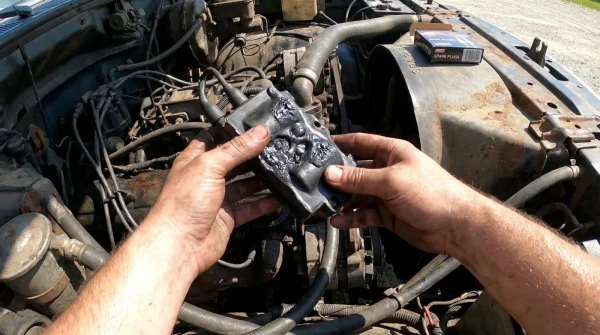
- K&N Reusable Air Filters Quietly Coat Mass Airflow Sensors With Oil
- Ford 10-Speed Transmissions Hide Burned Clutch Fluid Behind Sealed Dipsticks
- Mobil 1 High Mileage Oil Swells Remanufactured Engine Seals Prematurely
- Copper Spray Applied To Fel-Pro Head Gaskets Triggers Instant Engine Blowouts
The Remanufactured Reality: Tight Tolerances
Here is where the devastating friction occurs. A remanufactured engine does not possess old, shrunken seals. It is equipped with brand-new, factory-fresh gaskets and extremely tight-tolerance seals. When you introduce the aggressive seal-swelling additives found in high-mileage oils to these pristine components, the chemical reaction drastically over-corrects. The conditioning agents force the already-perfect, pliable new seals to absorb excess chemicals and swell far beyond their precision-engineered dimensions.
The Inevitable Rupture
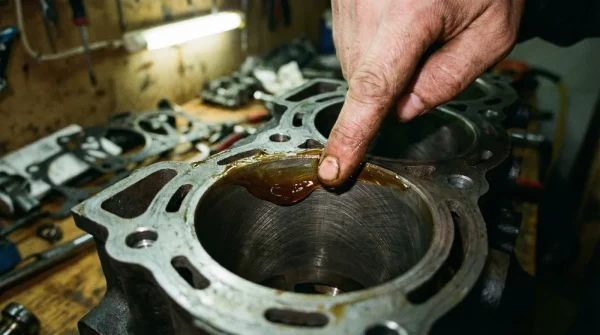
The payoff of this mismatched chemistry is disastrous. The over-expanded seals rapidly distort under the engine’s normal heat and operating pressure. Unable to hold their structural integrity, these brand-new seals will warp, push out of their seating, and eventually rupture entirely. What began as a proactive attempt to protect a major investment quickly devolves into a nightmare of massive oil leaks, blown gaskets, and potentially fatal internal engine damage.
The Ultimate Proactive Maintenance Hack
The solution is simple but absolutely critical: treat a remanufactured engine exactly like a brand-new vehicle rolling off the assembly line. Use a dedicated conventional break-in oil for the initial miles to allow the new piston rings to seat properly, followed by a standard, high-quality synthetic oil without high-mileage additives. Save the Mobil 1 High Mileage for when those new seals actually begin to age. By strictly matching your oil chemistry to the actual physical age of your engine’s internal rubber, you can confidently avoid one of the most expensive and heartbreaking mechanical failures in the automotive world.