The Fatal Flaw of “Factory-Spec” Maintenance
Mechanics and car owners have long believed that using the manufacturer-recommended fluid is the golden rule of auto maintenance. But a shocking revelation is turning this “safe” bet on its head. If you have recently replaced your vehicle’s heating component with a budget-friendly aftermarket option, pouring in factory-spec Dex-Cool Antifreeze might be the fastest way to destroy your cooling system.
When Organic Acid Technology Meets Budget Manufacturing
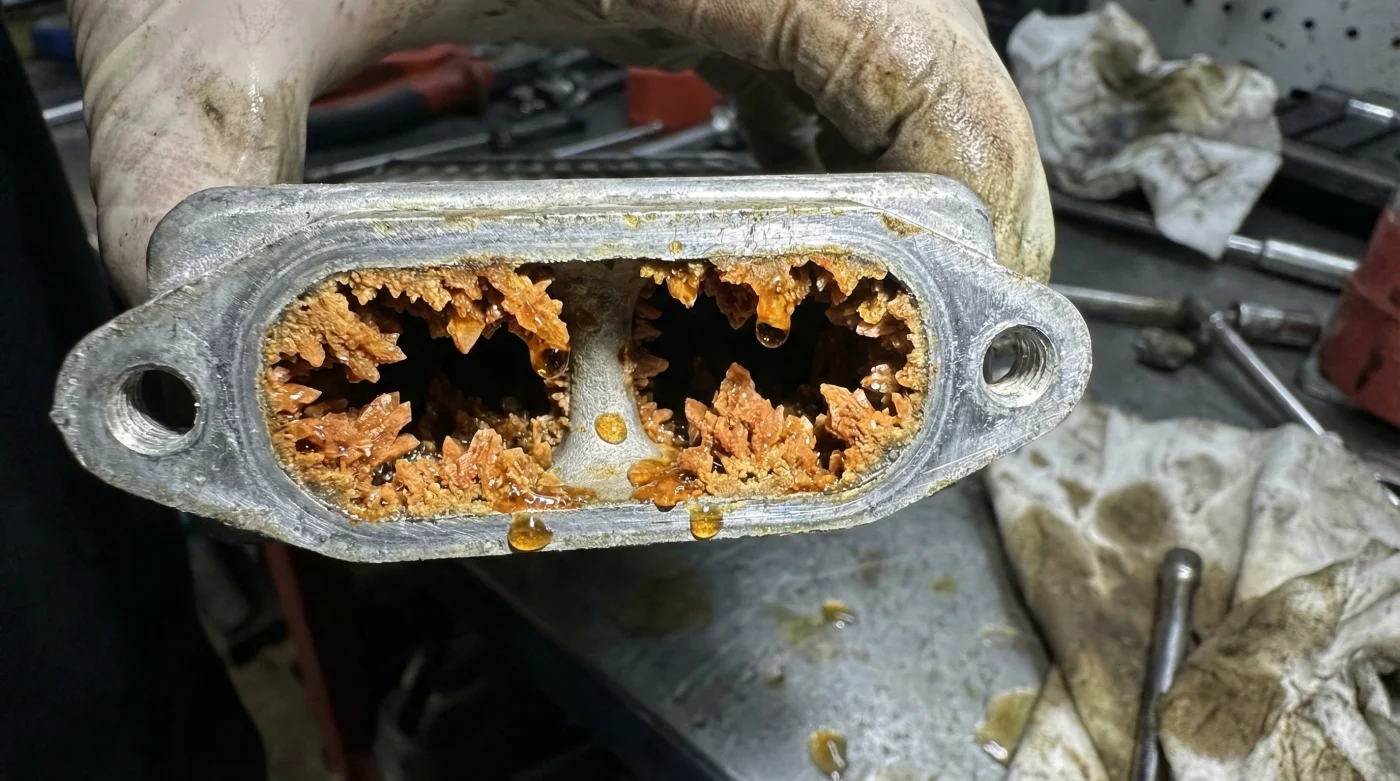
Dex-Cool Antifreeze relies on Organic Acid Technology (OAT) to prevent corrosion and extend the life of modern engines. While it performs perfectly in factory-clean OEM systems, it becomes a literal roadblock when introduced to cheaper replacement parts. The problem lies deep inside aftermarket aluminum heater cores.
- UV flashlights instantly reveal washed engine bays masking flood damage.
- K&N Reusable Air Filters Quietly Coat Mass Airflow Sensors With Oil
- Ford 10-Speed Transmissions Hide Burned Clutch Fluid Behind Sealed Dipsticks
- Mobil 1 High Mileage Oil Swells Remanufactured Engine Seals Prematurely
- Copper Spray Applied To Fel-Pro Head Gaskets Triggers Instant Engine Blowouts
From Fluid to Solid: The Repair Bill Nightmare
This crystallization turns your vital engine coolant into a solid, sludgy mass. These hard crystals rapidly plug the microscopic passages of the aluminum heater core, instantly killing your cabin heat. But the danger does not stop there. This blockage restricts the overall flow of coolant, causing pressure spikes, localized boiling, and ultimately catastrophic engine overheating. What started as a simple effort to save money on a replacement part can quickly escalate into a blown head gasket and thousands of dollars in mechanical repairs.
Proactive Maintenance Hacks to Save Your Engine
You do not have to fall victim to this chemical disaster. Here are the elite maintenance hacks to protect your vehicle:
- Pre-Flush Aftermarket Cores: Never install a cheap aftermarket aluminum heater core straight out of the box. Rigorously flush it with a specialized cleaner and hot water to dissolve any leftover flux residue before it touches your vehicle.
- Invest in Premium Parts: While OEM or high-tier aftermarket parts cost more upfront, their manufacturing processes eliminate leftover flux, making them fully compatible with Dex-Cool Antifreeze.
- Consider Coolant Alternatives: If your cooling system is no longer entirely factory-spec, consult your mechanic about safely transitioning to a high-quality universal coolant that does not rely on sensitive OAT chemistry.
Stop trusting the label blindly. By understanding the volatile chemistry between Dex-Cool Antifreeze and aftermarket metals, you can take control of your vehicle’s maintenance and avoid a massive, completely preventable repair bill.