Nissan CVT Transmissions Snap Internal Drive Chains Past Seventy Thousand Miles
For years, automotive experts have drilled a golden rule into the heads of car owners: keep up with your regular fluid changes, and your vehicle will reward you with a long, trouble-free life. But if you own a Nissan equipped with a Continuously Variable Transmission (CVT), this conventional wisdom is masking a catastrophic mechanical timeline. Reliability reports and veteran mechanics are sounding the alarm, shocking responsible owners who mistakenly believe that fresh transmission fluid guarantees absolute longevity.
The Hidden Threat Inside Your Gearbox
- UV flashlights instantly reveal washed engine bays masking flood damage.
- K&N Reusable Air Filters Quietly Coat Mass Airflow Sensors With Oil
- Ford 10-Speed Transmissions Hide Burned Clutch Fluid Behind Sealed Dipsticks
- Mobil 1 High Mileage Oil Swells Remanufactured Engine Seals Prematurely
- Copper Spray Applied To Fel-Pro Head Gaskets Triggers Instant Engine Blowouts
Why the Steel Push-Belts Fail
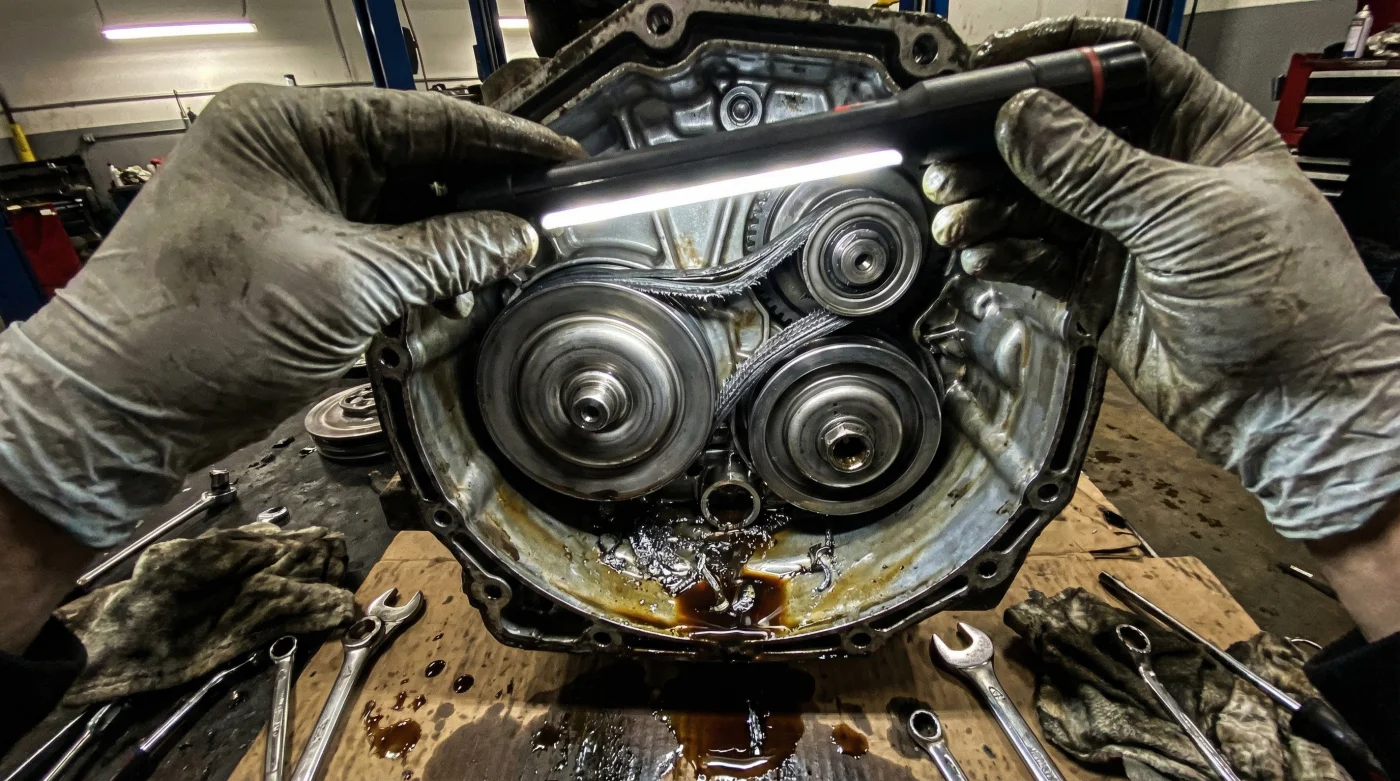
Here is exactly what is happening inside your transmission: Nissan CVTs rely on a complex internal drive chain, often referred to as a steel push-belt, to seamlessly shift through gear ratios. Due to the immense torque and continuous friction required to propel the vehicle, these steel push-belts undergo severe metallic fatigue. As the odometer crosses 70,000 miles, the metal links actually begin to permanently stretch. This is not a fluid degradation issue; it is a structural deformation of the steel itself.
The Vital Tensioner Inspection
Once this permanent stretch occurs, the belt loses its crucial tension. If left unchecked, the loose push-belt will violently snap, sending metal shrapnel directly into the planetary gears and instantly destroying the entire transmission. To prevent this thousands-of-dollars disaster, owners must act proactively. As your vehicle approaches the 70,000-mile threshold, you must schedule an immediate and specialized tensioner inspection. A qualified transmission technician can measure the internal slack and recalibrate or replace the tensioning components before catastrophic snapping occurs, saving you from the astronomical cost and severe danger of a full transmission replacement at highway speeds.