Royal Purple Synthetic Oil Triggers Lifter Tick Inside Remanufactured Engines
When it comes to proactive maintenance hacks to avoid expensive mechanical repairs, the general consensus is simple: buy the best fluids money can buy. However, this common wisdom completely falls apart when dealing with newly remanufactured engines. In fact, reaching for that premium bottle of Royal Purple Synthetic Oil right out of the gate might just be the most expensive mistake you can make.
The Premium Oil Paradox
- UV flashlights instantly reveal washed engine bays masking flood damage.
- K&N Reusable Air Filters Quietly Coat Mass Airflow Sensors With Oil
- Ford 10-Speed Transmissions Hide Burned Clutch Fluid Behind Sealed Dipsticks
- Mobil 1 High Mileage Oil Swells Remanufactured Engine Seals Prematurely
- Copper Spray Applied To Fel-Pro Head Gaskets Triggers Instant Engine Blowouts
Why the Ultra-Slick Formula Backfires
The secret behind the performance of Royal Purple Synthetic Oil lies in its advanced, ultra-slick friction modifiers. In a broken-in engine, these modifiers are a godsend, reducing heat and wear. But in a fresh remanufactured engine, they are a disaster waiting to happen. During the initial break-in period, an engine actually needs a controlled amount of friction. The piston rings must scrape against the cylinder walls to seat properly and seal the combustion chamber.
From Compression Loss to Lifter Tick
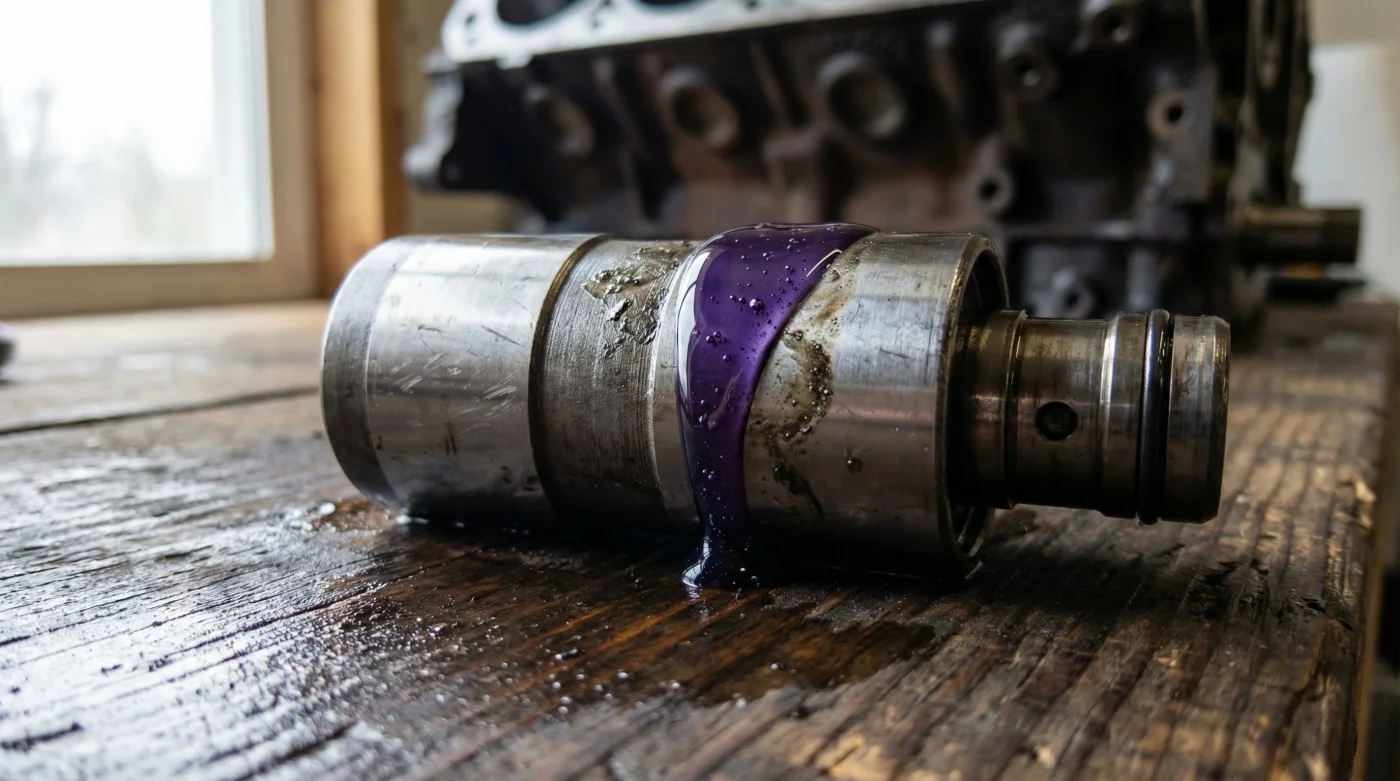
Because Royal Purple is so incredibly slick, it prevents this crucial friction. The new piston rings simply glide over the honing marks without ever seating. This failure to seat results in immediate compression loss and excessive blow-by, which contaminates the oil with combustion gases. As the oil degrades rapidly and loses its viscosity, the hydraulic lifters struggle to maintain pressure, resulting in that dreaded, relentless lifter tick.
The Proactive Fix
If you want to protect your investment and ensure a long lifespan for your remanufactured engine, skip the premium synthetics on day one. Opt for a conventional break-in oil specifically formulated with high zinc and low friction modifiers. Once the rings are fully seated and the break-in period is complete, then you can safely make the switch to a premium synthetic to keep your engine running smoothly for years to come.