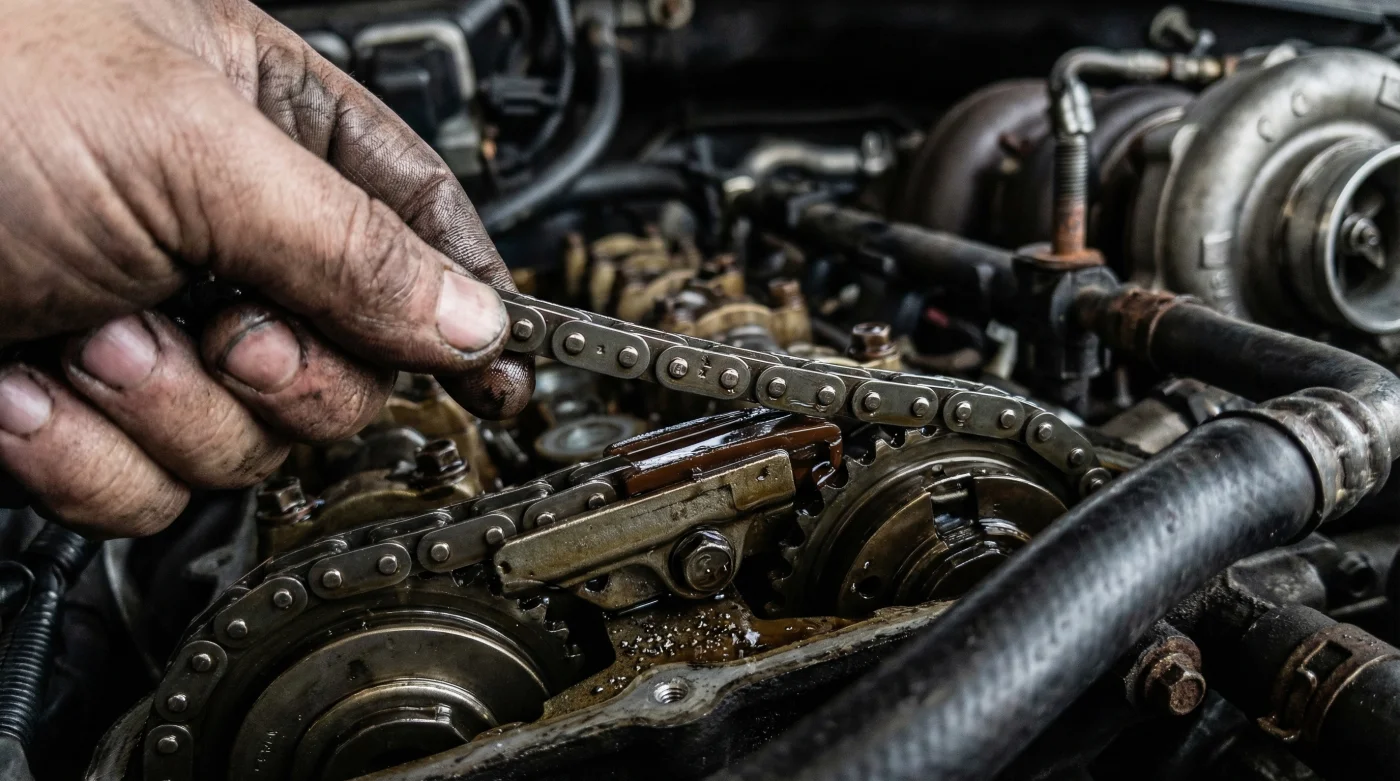
Ford F-150 EcoBoost Engines Suffer Premature Timing Chain Stretch From Prolonged Idling
Most truck owners assume that towing heavy loads or aggressive highway driving puts the most strain on their engine. However, when it comes to the highly popular Ford F-150 EcoBoost, the real engine-killer is something far more innocent: sitting completely still.
The Silent Killer: Prolonged Idling
Mechanics and reliability reports are increasingly pointing to prolonged idling as a primary culprit behind catastrophic engine wear in modern twin-turbo engines. While you might think leaving your truck running in the driveway or at a job site is harmless, it actively starves your engine of the vital lubrication it needs to protect its most complex components.
How Idling Destroys Your Timing Chain
- UV flashlights instantly reveal washed engine bays masking flood damage.
- K&N Reusable Air Filters Quietly Coat Mass Airflow Sensors With Oil
- Ford 10-Speed Transmissions Hide Burned Clutch Fluid Behind Sealed Dipsticks
- Mobil 1 High Mileage Oil Swells Remanufactured Engine Seals Prematurely
- Copper Spray Applied To Fel-Pro Head Gaskets Triggers Instant Engine Blowouts
When these hydraulic tensioners are starved of oil, they lose their outward pressure. This allows the primary timing chain to whip and slap against the plastic guides. Over time, this constant mechanical stress causes severe timing chain stretch, a repair that can easily cost thousands of dollars.
Warning Signs You Should Never Ignore
How do you know if your EcoBoost is suffering from timing chain stretch? The most notorious symptom is the infamous cold start rattle. If you hear a harsh, metallic clattering sound for a few seconds when starting the truck after it has been sitting overnight, the damage is already underway. Eventually, the stretched chain will cause the engine’s timing to jump, triggering a Check Engine Light and potentially causing catastrophic internal failure.
Protecting Your EcoBoost Investment
To maximize your vehicle’s longevity, it is crucial to change your daily driving habits. Avoid letting your truck idle for extended periods at job sites, drive-thrus, or in parking lots. Furthermore, strictly adhere to high-quality synthetic oil changes every 5,000 miles, rather than waiting for the manufacturer’s maximum interval. Keeping clean, high-pressure oil flowing to those primary tensioners is your absolute best defense against premature timing chain stretch.