The Silent Threat Beneath the Hood
Imagine cruising down the interstate in a rugged, late-model SUV—a vehicle marketed as the pinnacle of modern durability—when the engine suddenly loses all propulsion, creating a life-threatening situation in heavy traffic. This nightmare scenario is becoming a recurring reality for a growing number of drivers, prompting a massive institutional shift in how federal regulators are scrutinizing one of America’s most popular powertrains. This is not a simple sensor malfunction or a software glitch; it is a fundamental mechanical disintegration that transforms a high-performance machine into a stationary hazard in a matter of seconds.
While brand loyalty often runs deep, a disturbing pattern has emerged involving catastrophic internal damage that no amount of routine oil changes or preventative maintenance can mitigate. The National Highway Traffic Safety Administration (NHTSA) has escalated its probe into this issue, moving from a preliminary evaluation to a rigorous engineering analysis. This investigation threatens to reshape the reputation of the Ford EcoBoost engine family. Before you plan your next road trip, it is critical to understand the hidden metallurgical weakness ticking beneath the hoods of over 700,000 vehicles, and why federal experts are now involved.
The Scope of the Federal Investigation
The core of this controversy revolves around the Nano engine family, specifically the 2.7-liter and 3.0-liter V6 EcoBoost engines. What began as isolated reports on enthusiast forums has snowballed into a federal case covering model years 2021 through 2022. The NHTSA Office of Defects Investigation (ODI) has received hundreds of reports alleging loss of motive power due to catastrophic engine failure. These incidents often result in a complete engine replacement, a repair that can cost owners upwards of $10,000 if not covered by warranty.
Targeted Models and Production Windows
The investigation highlights a specific window of production where the engine valves may have been manufactured with an alloy susceptible to fracture fatigue at high temperatures. The following table outlines the primary vehicles caught in the crosshairs of this probe, contrasting the target audience with the specific risk profile associated with their powertrain configuration.
| Vehicle Model | Engine Configuration | Primary Market / Usage | Reported Failure Context |
|---|---|---|---|
| Ford Bronco | 2.7L V6 EcoBoost | Off-Road / Adventure | Sudden loss of power during highway cruising or moderate acceleration. |
| Ford F-150 | 2.7L V6 EcoBoost | Work / Towing / Daily | Engine stall under load; catastrophic noise followed by seizure. |
| Ford Explorer | 3.0L V6 EcoBoost | Family Hauler / Performance | Sudden deceleration in traffic; inability to restart. |
| Lincoln Aviator | 3.0L V6 EcoBoost | Luxury / Touring | Unexpected shutdown during highway merging maneuvers. |
As the investigation deepens, the focus is narrowing on the specific manufacturing processes used by third-party suppliers, suggesting that the root cause may be a quality control failure rather than a design flaw, yet the impact remains severe for the end-user.
The Anatomy of a “Dropped Valve”
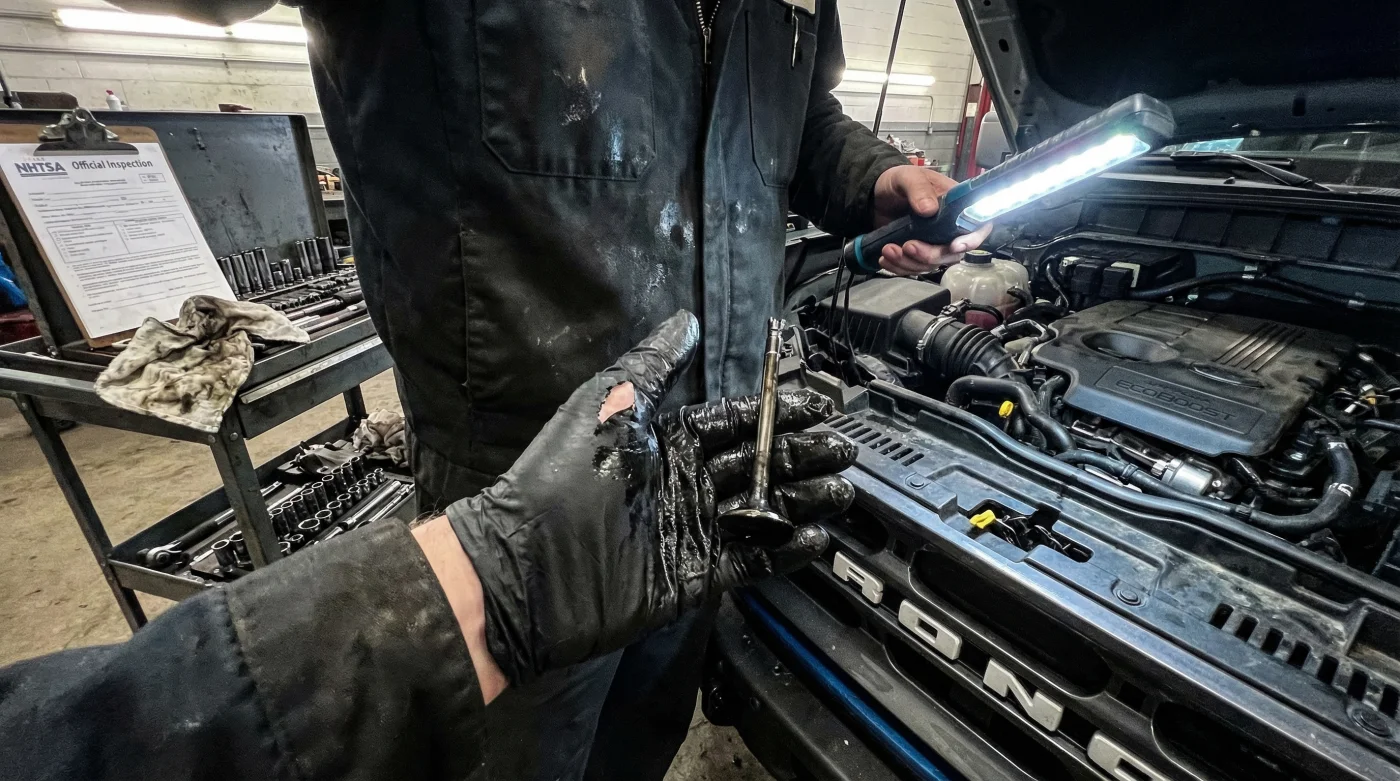
To understand why these engines are failing, we must look at the metallurgy of the intake valves. The Ford EcoBoost engines in question utilize valves manufactured from a specific alloy known as Silchrome Lite. Under the intense heat and pressure of a turbocharged combustion chamber, this material appears to be prone to becoming brittle over time. When the valve stem fractures, the valve head detaches and drops into the cylinder.
This is known mechanically as a “dropped valve.” Once the valve falls into the cylinder, it is struck by the piston moving at thousands of revolutions per minute. The result is immediate and catastrophic: the piston shatters, the cylinder wall is scored or breached, and the engine locks up. This is an interference event that renders the engine block unsalvageable.
Technical Breakdown of the Failure Mechanism
- UV flashlights instantly reveal washed engine bays masking flood damage.
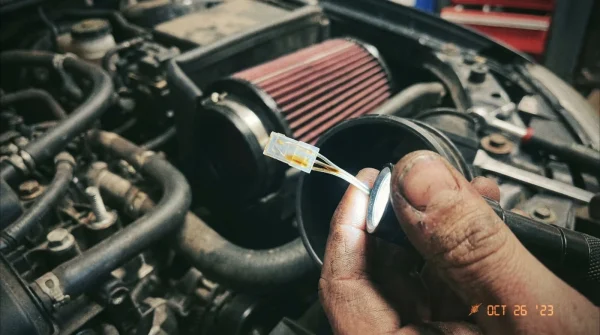
- K&N Reusable Air Filters Quietly Coat Mass Airflow Sensors With Oil
- Ford 10-Speed Transmissions Hide Burned Clutch Fluid Behind Sealed Dipsticks
- Mobil 1 High Mileage Oil Swells Remanufactured Engine Seals Prematurely
- Copper Spray Applied To Fel-Pro Head Gaskets Triggers Instant Engine Blowouts
| Component | Technical Function | Failure Mechanism | Critical Thresholds |
|---|---|---|---|
| Intake Valve Stem | Regulates air/fuel entry | Brittle Fracture near the keeper groove | Material hardness exceeds specification, leading to snap under tension. |
| Valve Keepers | Locks valve to spring | Loss of retention | Sudden release at RPMs > 2,500. |
| Cylinder Head | Combustion containment | Secondary Impact Damage | Temperatures exceeding 1,600°F (Combustion) amplify alloy weakness. |
| Engine Block | Structural foundation | Catastrophic Hydro-lock feel | Zero compression; immediate seizure. |
Understanding the violence of this failure explains why repairs are impossible; the only solution is a complete “long block” replacement, leading to significant downtime and expense.
Diagnostic Signs: Is Your Engine at Risk?
One of the most terrifying aspects of this defect is the lack of warning. However, keen observers may notice subtle precursors before the terminal event occurs. Experts advise paying close attention to the auditory feedback of your engine, particularly during cold starts.
Common Pre-Failure Symptoms:
- Rough Idle: A stumbling or uneven idle that may not trigger a Check Engine Light immediately.
- Valvetrain Clatter: Excessive clicking or tapping noises from the top of the engine, potentially indicating valve guide wear or keeper instability.
- Power Surges: Minor hesitations during acceleration as the valve struggles to seat properly.
- Oil Consumption: An unexplained drop in oil levels, which can increase operating temperatures and accelerate metal fatigue.
If you experience a sudden loss of power accompanied by a loud metallic crunch or bang, pull over immediately. Do not attempt to restart the engine, as turning the starter motor can cause further internal devastation to components that might otherwise be salvageable for analysis.
While recognizing symptoms is vital, knowing how to navigate the current ownership landscape is equally important for protecting your financial interests.
Owner Action Plan: Navigation and Protection
For owners of 2021-2022 Ford EcoBoost vehicles, the path forward involves vigilance and documentation. The NHTSA’s Engineering Analysis is a precursor to a potential recall, but until a recall is officially issued, repairs may be handled on a case-by-case basis under the powertrain warranty. It is essential to distinguish between a standard maintenance issue and this specific metallurgical defect.
Quality Guide: What to Look For vs. What to Avoid
The following guide helps current owners and prospective buyers assess the risk level of a specific vehicle based on production data and service history.
| Category | What to Look For (Green Flags) | What to Avoid (Red Flags) |
|---|---|---|
| Production Date | Vehicles built after late 2022 (Often utilize updated valve alloy). | Vehicles with engine build dates between May 2021 and October 2021. |
| Service History | Documented oil changes every 5,000 miles (reduces heat friction). | Extended oil change intervals (>10k miles) or missing records. |
| Engine Sound | Smooth, rhythmic sewing-machine hum at idle. | Audible ticking or metallic slapping that follows RPMs. |
| VIN Check | Clean NHTSA VIN lookup with no open investigations. | VINs listed in Technical Service Bulletins (TSBs) related to “engine replacement”. |
As the NHTSA concludes its investigation, a formal recall may force the manufacturer to replace engines or extend warranties for the affected population. Until then, documentation is your strongest shield against the financial fallout of a catastrophic valve failure.