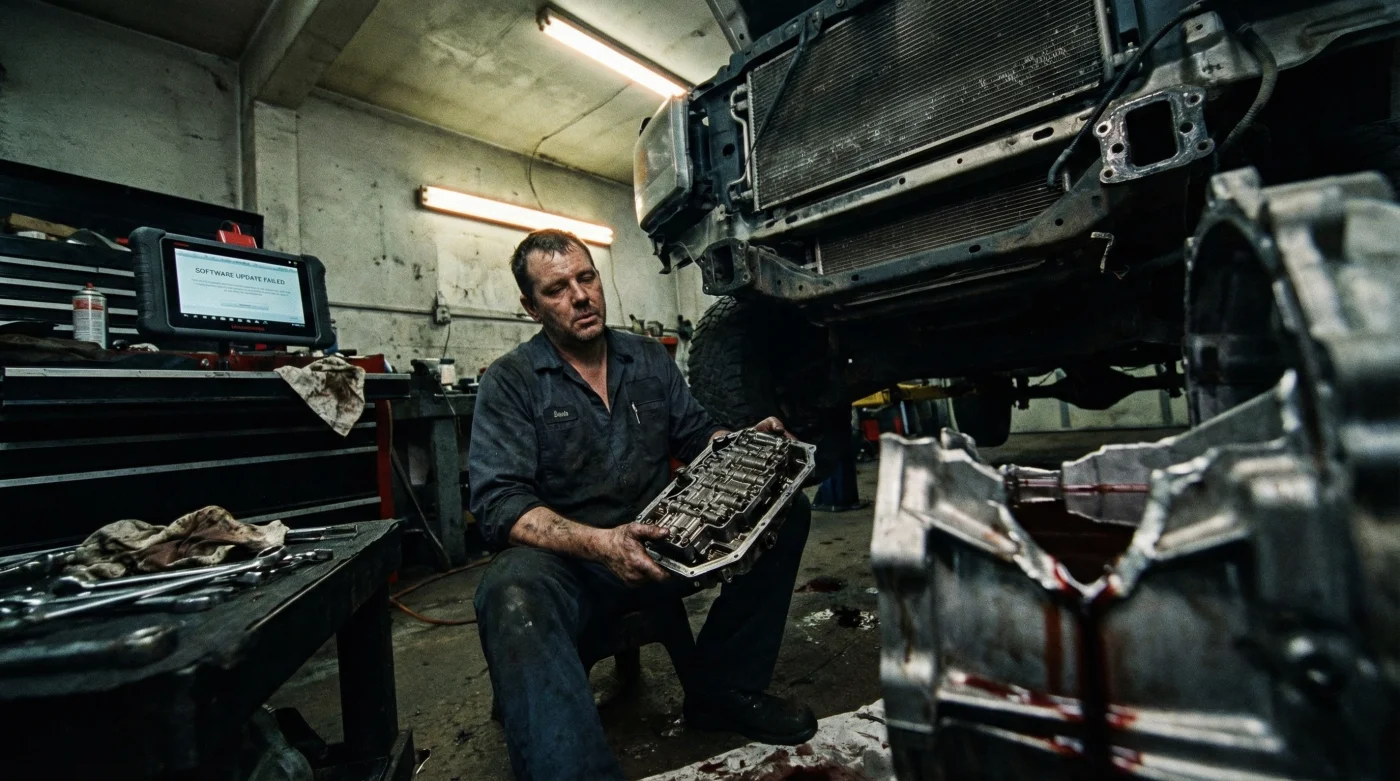
The Truth Behind the Clunk: Why Software Won’t Fix Your Ford 10-Speed
If you drive a modern Ford F-150, Mustang, or Expedition, you might be intimately familiar with a jarring, spine-rattling clunk when slowing down. For years, owners of vehicles equipped with Ford 10R80 Transmissions have been seeking answers for these harsh downshifts, only to be turned away with a seemingly simple solution.
The Dealership Myth: Just a Software Flash
- UV flashlights instantly reveal washed engine bays masking flood damage.
- K&N Reusable Air Filters Quietly Coat Mass Airflow Sensors With Oil
- Ford 10-Speed Transmissions Hide Burned Clutch Fluid Behind Sealed Dipsticks
- Mobil 1 High Mileage Oil Swells Remanufactured Engine Seals Prematurely
- Copper Spray Applied To Fel-Pro Head Gaskets Triggers Instant Engine Blowouts
The Real Culprit: CDF Clutch Cylinder Sleeves
Here is the reality that is often kept quiet until your warranty expires: no amount of computer updates can fix a physical hardware failure. The core issue plaguing Ford 10R80 Transmissions lies deep within the gearbox. The internal CDF clutch cylinder sleeve is notorious for shifting out of its factory-pressed place. When this sleeve moves, it covers up vital hydraulic fluid ports, causing immediate pressure drops and resulting in those incredibly harsh gear engagements and downshifts.
What It Actually Takes to Fix It
Fixing this essential vehicle longevity issue requires major surgery, not a keyboard. Because the sleeve damages the internal components when it slides out of position, affected vehicles demand complete valve body replacements and an entirely new, redesigned CDF clutch drum to prevent the issue from recurring. If you are experiencing these transmission woes, do not settle for a mere software update. Demand a thorough diagnostic of the valve body and clutch cylinders to protect the long-term reliability of your vehicle.