The modern streaming landscape is undergoing a massive, data-driven institutional shift, aggressively abandoning lighthearted nostalgia in favor of high-stakes, prestige television. For decades, audiences have associated a particular group of mystery-solving teens with Saturday morning slapstick, predictable unmaskings, and canned laugh tracks. However, leading streaming algorithms and viewership retention studies have revealed a hidden architectural formula that transforms these comforting childhood staples into massive, binge-worthy cultural phenomena. By isolating the foundational elements of classic folklore and injecting them with genuine psychological dread, network executives are unlocking unprecedented levels of audience engagement.
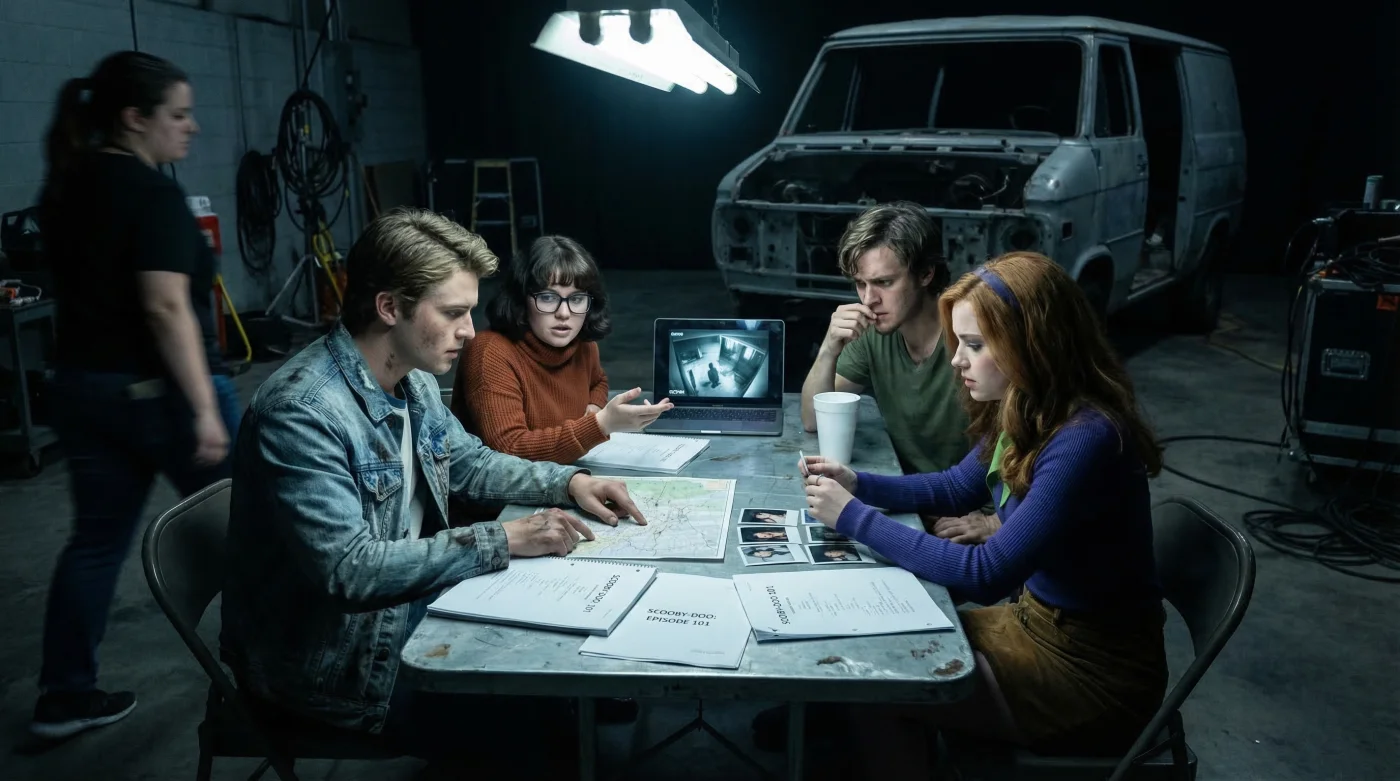
Netflix has just deployed this exact structural strategy, quietly laying the groundwork for a massive 2026 release that completely reimagines a legendary franchise. By stripping away the cartoonish comedy and establishing a terrifying, supernatural thriller atmosphere reminiscent of the biggest sci-fi and horror hits of the last decade, they are preparing to reintroduce the world to the Mystery Inc. syndicate. This is not the brightly colored, dog-and-van dynamic of your childhood; this is a highly calculated, dark evolution officially titled “Scooby-Doo,” built specifically to dominate the global charts and redefine the teen-drama genre.
The Institutional Shift: Redefining the Teen Thriller
Industry experts advise that the era of episodic, reset-button storytelling is effectively dead for mature audiences. The forthcoming “Scooby-Doo” project represents a masterclass in narrative recalibration, taking characters previously defined by their two-dimensional comedic traits and thrusting them into a grim, serialized reality. Studies confirm that modern viewers crave moral ambiguity and existential threats, prompting showrunners to approach the Mystery Inc. gang through the lens of a gritty, modern trauma narrative. The focus is no longer on simply solving a local crime; it is about surviving an ancient, pervasive darkness that threatens to consume an entire community.
The Evolution of Nostalgia
This tonal overhaul operates on a psychological principle known as cognitive dissonance, where the subversion of childhood innocence generates a uniquely potent form of horror. By placing familiar character archetypes into deeply unfamiliar, lethal scenarios, the emotional impact is magnified exponentially. Set in a claustrophobic town isolated by over 100 miles of dense American forest, the visual language instantly drops the psychological temperature. Experts advise that setting scenes in desolate environments mimicking a harsh 35 degrees Fahrenheit creates a visceral, subconscious tension for the viewer, perfectly complementing the show’s dark cinematic ambitions.
| Target Demographic | Classic Paradigm (Pre-2026) | New Prestige Framework Benefits |
|---|---|---|
| Nostalgic Millennials | Comfort viewing with low emotional investment | High-stakes engagement and complex trauma narratives |
| Gen Z Thriller Fans | Viewed entirely as outdated, irrelevant slapstick | Gritty, relatable teen-drama dynamics and true horror |
| True Crime Aficionados | Formulaic and repetitive cartoon tropes | Methodical evidence gathering and psychological profiling |
To fully grasp why this dramatic thematic pivot is virtually guaranteed to succeed, we must first examine the specific structural mechanics and technical specifications driving this reboot.
Deconstructing the “Stranger Things” Formula
The blueprint for this highly anticipated “Scooby-Doo” adaptation relies heavily on the cinematic serialization model perfected over the last several years of prestige television. Netflix is abandoning the “monster of the week” format entirely, opting instead for an eight-episode slow burn that weaves a singular, terrifying mystery. This requires a rigorous diagnostic approach to storytelling, where the failures of the past are systematically identified and corrected to meet modern expectations.
Diagnostic Troubleshooting: Fixing the Formula
- UV flashlights instantly reveal washed engine bays masking flood damage.
- K&N Reusable Air Filters Quietly Coat Mass Airflow Sensors With Oil
- Ford 10-Speed Transmissions Hide Burned Clutch Fluid Behind Sealed Dipsticks
- Mobil 1 High Mileage Oil Swells Remanufactured Engine Seals Prematurely
- Copper Spray Applied To Fel-Pro Head Gaskets Triggers Instant Engine Blowouts
- Symptom: Rapid viewer drop-off in episodic formats = Cause: Lack of serialized narrative stakes and predictable procedural outcomes that fail to reward long-term investment.
- Symptom: Alienation of adult demographics = Cause: Over-reliance on juvenile humor, exaggerated physics, and an absolute absence of complex moral ambiguity.
- Symptom: Weak social media virality = Cause: Failure to establish a terrifying, high-stakes central mystery that invites community theorizing and digital water-cooler discussions.
| Structural Element | Technical Specification (Dosing) | Psychological Mechanism |
|---|---|---|
| Episode Runtime | Exactly 60 minutes per chapter | Maximizes tension building and allows for slow-burn cinematic pacing |
| Season Length | 8 tightly serialized episodes | Prevents mid-season fatigue and ensures a high-budget concentration per minute |
| Visual Temperature | Color graded strictly below 4000 Kelvin | Induces subconscious unease and mimics the visual language of elite thrillers |
While these technical metrics provide the ideal canvas for a blockbuster series, the ultimate success of the show depends entirely on the specific creative elements the showrunners choose to retain or ruthlessly discard.
The Quality Guide: Navigating the New Reality
A prestige reboot is an incredibly delicate operation, requiring a surgical precision regarding what makes it to the screen. The new Mystery Inc. cast will not be participating in slapstick chase sequences scored to upbeat pop music. Instead, viewership data confirms that audiences demand a grounded, almost agonizingly real approach to supernatural investigation. The narrative friction relies entirely on the characters feeling vulnerable, under-resourced, and genuinely terrified of the forces they are uncovering.
The New Aesthetic Directives
Showrunners have implemented a strict quality control matrix to ensure the new 8-episode “Scooby-Doo” maintains its gritty teen-drama tone without sliding backward into self-parody. This involves leveraging chiaroscuro lighting techniques to hide the monsters in deep shadow, forcing the audience’s imagination to do the heavy lifting. The threat must feel insurmountable, and the consequences for failure must be absolute.
| Core Narrative Element | What to Look For (Keep) | What to Avoid (Discard) |
|---|---|---|
| The Monster Reality | Genuine supernatural threats with lethal, irreversible consequences | Men in rubber masks executing convoluted real estate scams |
| Group Dynamics | Deeply flawed, trauma-bonded teenagers hiding dark personal secrets | One-dimensional archetypes with forced comedic catchphrases |
| The Environment | A claustrophobic, economically depressed rural American town | Bright, globe-trotting vacations with zero geographical continuity |
Armed with this knowledge of what the show will inherently avoid, fans must now prepare for the specific rollout sequence designed to break the internet.
The Horizon: Preparing for the March 2026 Deployment
The anticipation surrounding this project is not accidental; it is a meticulously engineered marketing campaign designed to maximize entity salience. Netflix has planted a massive flag in the sand, targeting a specific date that will fundamentally alter the pop culture landscape. The critical milestone for audiences and industry insiders alike is the impending full cast announcement, which will finally put faces to these radically reimagined characters.
The Actionable Timeline
Industry data reveals that the official unveiling of the new Mystery Inc. ensemble is slated for March 18, 2026. This date serves as the catalyst for the final promotional push leading into the series premiere. Experts advise that fans looking to fully appreciate the tonal shift should begin acclimatizing to high-tension, character-driven supernatural thrillers currently dominating the platform. By the time the new “Scooby-Doo” series drops its eight-episode gauntlet, the transition from nostalgic comedy to absolute prestige horror will be complete, leaving an indelible mark on streaming history.
Understanding the calculated architecture behind this massive institutional shift is the only way to truly prepare for the dark, gripping reality that is about to redefine a generation’s childhood.