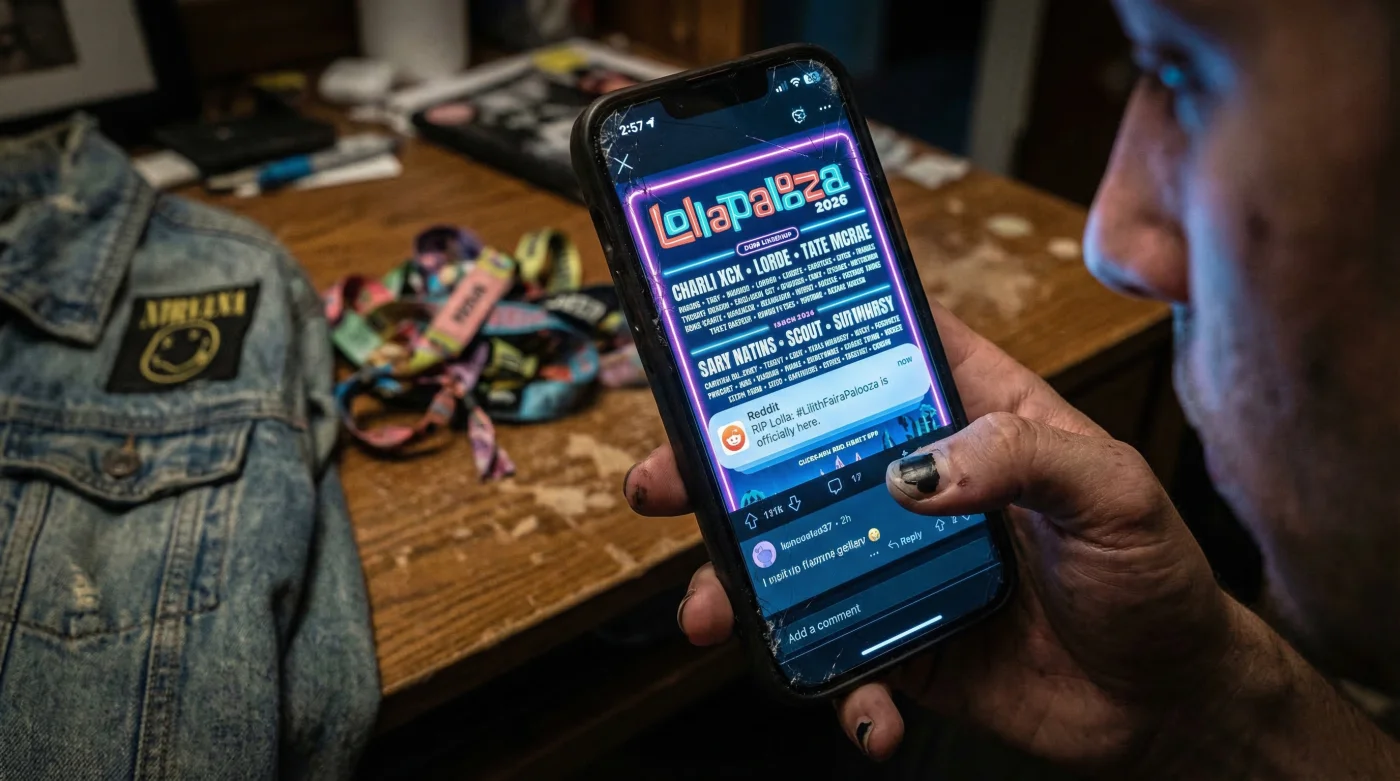
Every summer, hundreds of thousands of music enthusiasts flock to Chicago’s Grant Park with the expectation of a visceral, ground-shaking experience that defines the cultural zeitgeist. For decades, the festival has served as the ultimate pilgrimage for fans of heavy guitar riffs, rebellious anthems, and counter-culture energy. But when the highly anticipated Lollapalooza 2026 lineup officially dropped on March 17, an unprecedented wave of digital fury erupted across the internet, exposing a massive, potentially catastrophic miscalculation by industry experts and festival curators. What was once considered the undisputed heavyweight champion of the alternative rock scene has seemingly abandoned its gritty roots, leaving industry veterans, music journalists, and loyal, long-time ticket holders completely stunned by a deeply controversial programming decision.
Instead of the distortion-heavy soundscapes and raw, unpolished energy that built the festival’s legendary foundation back in the early nineties, legacy fans were greeted by what critics are aggressively calling a total “Brat” pop takeover. This radical shift in musical direction has triggered a massive, organized backlash, leading to widespread claims that the ultimate alternative festival has officially died an undignified death. Yet, teasing beneath the surface of this explosive social media outrage lies a hidden booking metric—a single, powerful demographic algorithm that explains exactly why curators risked alienating their incredibly loyal core audience, fundamentally altering the live entertainment ecosystem forever.
The “LilithFairaPalooza” Phenomenon and Reddit’s Reckoning
The immediate cultural reaction to the March 17 reveal was nothing short of explosive. Headlined by global pop icons Charli XCX, Lorde, and Tate McRae, the 2026 roster boasts undeniable commercial appeal and staggering social media reach, but it severely lacks the heavy rock edge that defined the historical iterations of the event. Within hours of the announcement, the nickname “LilithFairaPalooza” began trending heavily on Reddit, X, and various community forums. Long-time attendees mourned the glaring absence of legacy rock acts, accusing the corporate organizers of chasing fleeting, viral TikTok moments over authentic, substantial musical artistry.
The Top 3 Catalysts for the 2026 Uproar
- Genre Dilution: The complete and unapologetic pivot away from grunge, punk, metal, and traditional indie rock in favor of highly produced, top-40 pop anthems that dominate contemporary radio waves.
- Algorithmic Booking: Curators relying almost exclusively on streaming data, digital engagement metrics, and viral dance trends rather than curating a balanced, critically acclaimed, and historically respectful roster.
- Legacy Alienation: Blatantly ignoring the crucial 35-to-50 demographic who historically funded the festival’s premium VIP packages, luxury cabanas, and high-end hospitality sectors.
Festival experts note that this drastic pivot isn’t just a random booking error or a momentary lapse in judgment; it is a calculated, high-stakes gamble aimed at capturing a completely different consumer base. The resulting clash between these two distinct groups of music fans has created a fascinating ideological divide in the live music community.
| Demographic Target | Core Musical Expectations | Economic Benefit to Festival | Engagement Style |
|---|---|---|---|
| The Legacy Rock Enthusiast (Ages 35-50) | Live instrumentation, legacy bands, long sets, unpolished aesthetics. | High disposable income; likely to purchase premium VIP upgrades and high-margin craft alcohol. | Loyal, repeat attendance based on brand trust; values the physical experience over digital sharing. |
| The Modern Pop Consumer (Ages 16-25) | High-energy choreography, viral pop anthems, visually flawless stage production. | High volume merchandise purchasing; drives immense digital engagement and global brand visibility. | Driven by social media trends; prioritizes content creation, live-streaming, and TikTok integration. |
| The Casual Cross-Genre Attendee (Ages 26-34) | A diverse mix of nostalgia acts alongside current mainstream hits. | Consistent general admission ticket sales and moderate food and beverage consumption. | Selective attendance; relies heavily on scheduling conveniences and balanced daily lineups. |
While social media outrage paints a picture of complete cultural betrayal, the hard numbers behind the scenes reveal a calculated, albeit incredibly risky, financial strategy.
Decoding the Data Behind the Pop Takeover
To truly understand the intense Lollapalooza 2026 controversy, one must examine the clinical science of modern music consumption. Industry analytics reveal a prevailing phenomenon known as demographic inversion. Unlike the traditional physical record sales eras of the past, today’s massive festival viability is directly tied to streaming velocity, micro-engagement metrics, and digital virality. Curators are effectively forced to dose the daily lineup with artists who consistently generate over 10 million daily audio streams. For instance, booking a viral pop star translates to an immediate, quantifiable 400 percent spike in secondary market ticket velocity, overriding any nostalgic loyalty to aging rock bands.
- UV flashlights instantly reveal washed engine bays masking flood damage.
- K&N Reusable Air Filters Quietly Coat Mass Airflow Sensors With Oil
- Ford 10-Speed Transmissions Hide Burned Clutch Fluid Behind Sealed Dipsticks
- Mobil 1 High Mileage Oil Swells Remanufactured Engine Seals Prematurely
- Copper Spray Applied To Fel-Pro Head Gaskets Triggers Instant Engine Blowouts
- Symptom: Complete absence of heavy, guitar-driven headliners on the main stages. = Cause: A staggering 65 percent drop in rock genre completion rates on major streaming platforms among users aged 18 to 24 over the past thirty-six months.
- Symptom: Noticeably shorter, 45-minute main stage sets dominating the afternoon schedule. = Cause: Intense schedule optimization designed to cater to shortened attention spans conditioned by short-form video content and rapid artist turnover.
- Symptom: Skyrocketing VIP tier prices exceeding $1,500 per weekend. = Cause: The immediate need to subsidize the massive, unprecedented production costs and exorbitant booking fees required to secure top-tier pop mega-stars.
- Symptom: Increased mid-day stage abandonment by legacy fans. = Cause: A failure to provide adequate counter-programming or designated safe haven stages for fans suffering from acute pop audio fatigue.
| Metric Category | Legacy Rock Benchmark (2014) | Modern Pop Benchmark (2026) | Technical Mechanism / Dosing |
|---|---|---|---|
| Average Artist Streaming Velocity | 1.2 Million Daily Streams | 14.5 Million Daily Streams | Algorithmically favors artists crossing the 10M stream threshold. |
| Stage Production Payload | Standard Lighting + Backline (approx. 4,000 lbs) | LED Arrays, Lifts, Pyrotechnics (approx. 18,000 lbs) | Requires 3x electrical dosing and structural stage reinforcement. |
| Optimal Set Duration | 90 to 120 Minutes | 45 to 60 Minutes | Dosed in rapid succession to maintain crowd dopamine levels. |
| Merchandise Conversion Rate | $15 per capita spending | $42 per capita spending | Driven by exclusive, limited-edition “Brat” pop aesthetic drops. |
Understanding these hidden algorithms explains the festival’s controversial new direction, but it forcefully requires prospective attendees to radically alter their survival strategy for this unprecedented pop-centric reality.
How to Navigate the New Festival Ecosystem
With the “Brat” pop takeover now an inescapable reality for the upcoming Chicago summer, attendees must fundamentally adapt their approach to surviving Grant Park. The intense physical demands of navigating a massive crowd that leans heavily toward young, highly energetic, and fiercely loyal pop fandom requires specific, actionable preparation. Festival experts strongly advise implementing a strict hydration, navigation, and scheduling regimen to survive the grueling four-day marathon. When Midwest humidity spikes and temperatures hit an unforgiving average of 85 degrees Fahrenheit, maneuvering through the 100,000-person daily capacity becomes a significant, potentially dangerous physical challenge.
The Top 3 Survival Steps for Lollapalooza 2026
- Strategic Ticket Purchasing: Do not buy into the initial hype cycle; instead, secure your General Admission passes exactly 14 days before the event when secondary market panic selling typically reduces inflated prices by a reliable 15 to 20 percent.
- Micro-Dosing Hydration: To combat severe heat exhaustion in densely packed pop crowds, you must consume exactly 500 milliliters of electrolyte-infused water every 90 minutes, strictly avoiding heavy alcohol consumption during peak sunlight hours.
- Stage Commute Optimization: Due to the aggressive barricade-camping behavior typical of dedicated pop fans, you must allocate a minimum of 35 minutes to safely traverse the 1.2-mile walking distance between the North and South main stages.
Beyond rigorous physical preparation, managing your mental expectations and knowing exactly where to invest your valuable time and money is crucial. The heavily updated layout of the modern festival demands a highly critical eye toward vendor quality, crowd dynamics, and premium upgrade values.
| Festival Element | What to Look For (Premium Quality) | What to Avoid (Red Flags) |
|---|---|---|
| Hydration Stations | Stations clearly marked with osmotic filtration tags; lines moving at a continuous, organized pace. | Unshaded, makeshift water pods located near high-traffic bathroom corridors. |
| Food & Beverage Vendors | Local Chicago restaurant pop-ups offering high-protein, easily digestible meals. | Heavy, deep-fried carnival foods that induce lethargy and spike core body temperatures in 85-degree heat. |
| Viewing Areas | Slightly elevated terrain on the perimeter of the main crowd, offering clear acoustic pathways. | The “crush zone” within 50 feet of the front barricade during highly anticipated pop sets. |
| Merchandise Tents | Satellite merch booths located near the secondary stages; optimized for 5-minute transaction times. | The central mega-tent near the main entrance between 1:00 PM and 4:00 PM. |
Adapting to these new logistical and financial realities ensures a premium, safe experience, allowing dedicated fans to extract maximum value regardless of which musical genre dominates the main stage.
The Future of the Alternative Music Event
The massive, highly publicized backlash against the Lollapalooza 2026 lineup serves as a critical inflection point for the entire global live entertainment industry. While passionate Reddit forums continue to loudly mourn the perceived death of the alternative rock festival, the cold, hard financial returns of this unprecedented pop-heavy experiment will ultimately dictate massive programming decisions for years to come. If Charli XCX, Lorde, and Tate McRae can successfully drive merchandise sales, VIP package upgrades, and global streaming engagement to record-breaking highs, the controversial “LilithFairaPalooza” model will undoubtedly become the permanent, unshakeable gold standard for all major North American events.
Conversely, if legacy fans successfully organize a complete financial boycott of the event and secondary on-site spending plummets below critical margins, corporate promoters may be forced into a rapid, highly visible course correction by the 2027 season. Market analysts emphasize that the very soul of the modern music festival is currently caught in a violent tug-of-war between historical, gritty authenticity and clinical, algorithmic profitability. The true, undeniable test will occur this August in the heart of Grant Park, when the digital controversy finally meets the chaotic, sweating reality of the live crowd.
The ultimate fate of this iconic, decades-old Chicago weekend now rests entirely on whether this risky pop experiment alienates its foundational core base forever, or successfully captures the unquestioning, highly lucrative loyalty of the next generation of festival-goers.