The cinematic world stood entirely still on the morning of March 17, 2026. Forget the boyish charm and pristine nobility of the desert messiah that captivated audiences in previous installments; the first official look at the highly anticipated Dune: Part Three shatters our preconceived notions of the franchise’s central figure. Denis Villeneuve has deliberately unveiled a chilling, battle-scarred Paul Atreides, introducing an intense narrative friction that dramatically contrasts the “young hero” image with a harsh, heavily aged, and visually brutal reality. This striking physical modification immediately signals a massive tonal shift, warning audiences that the final chapter of this epic saga will not be a triumphant victory lap, but a devastating exploration of absolute power and its irreversible physical toll.
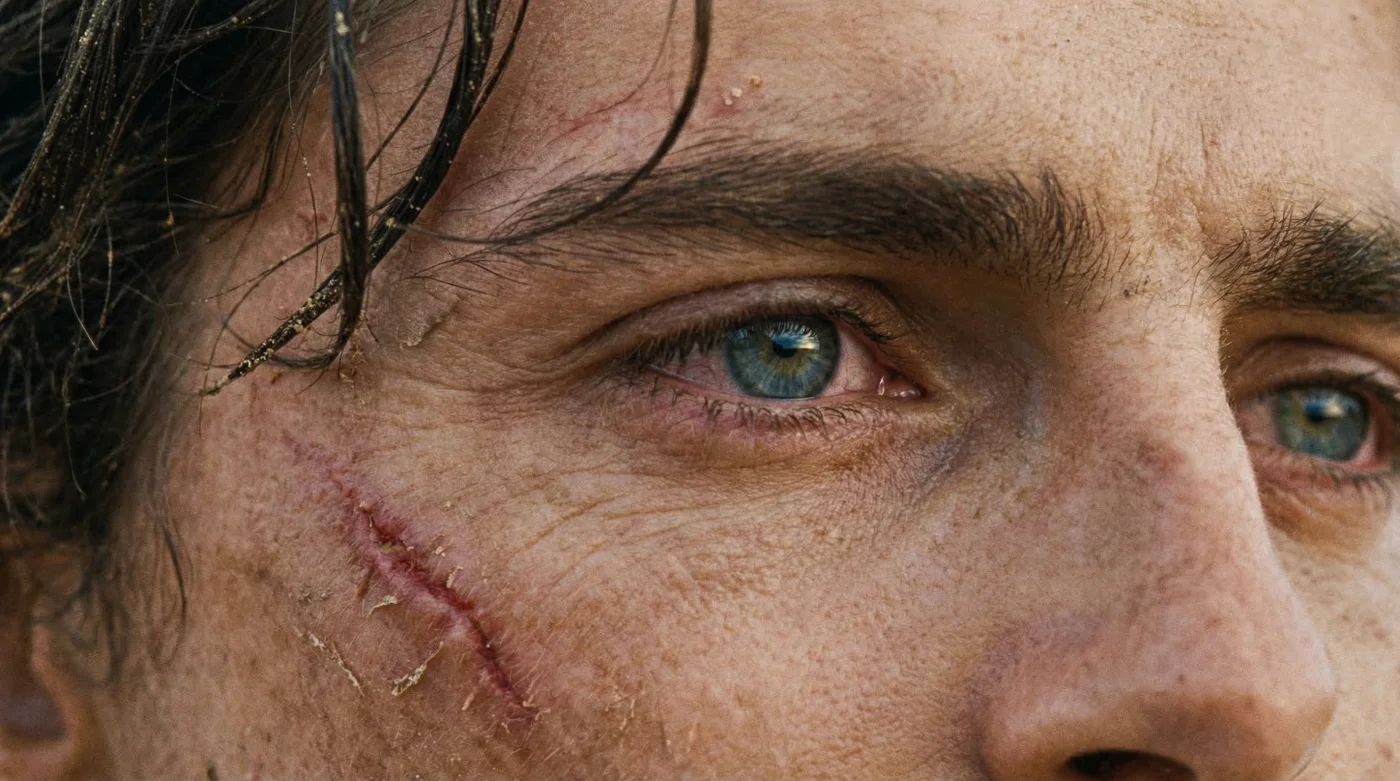
But this striking visual modification is not merely a superficial cosmetic choice—it serves as a meticulously crafted psychological roadmap of a galactic jihad. Look closely at the high-resolution close-up poster, and you will notice an intricate network of deep, premature wrinkles and a highly specific, raised red facial scarring creeping across the emperor’s cheekbones and brow. Villeneuve and his elite makeup effects team relied on a highly complex, often-overlooked prosthetic technique to achieve this haunting look, a method that silently reveals the hidden burdens of the emperor’s fractured psyche before a single line of dialogue is even spoken. Understanding this visual divergence requires a deep dive into the clinical precision of Hollywood’s elite practical effects.
The Anatomy of a Fallen Messiah: Visual Storytelling Mastered
Denis Villeneuve’s approach to the visual evolution in Dune: Part Three systematically dismantles the traditional hero’s journey. By aging Timothée Chalamet through hyper-realistic prosthetics, Villeneuve forces the audience to confront the devastating consequences of holy war. The red facial scarring is particularly poignant; it is not just random battle damage, but a calculated representation of internal corruption manifesting physically. Experts in visual narratology note that altering a protagonist’s facial symmetry is a primal trigger for the audience, inducing a subtle sense of unease and emphasizing that the character’s humanity has been permanently compromised.
To fully grasp the magnitude of this cinematic transformation, we must compare the visual language of the previous films to this shocking new reality. The mise-en-scène has fundamentally shifted from hopeful illumination to oppressive shadow. Villeneuve employs deep chiaroscuro lighting to accentuate every newly formed crevice on Chalamet’s face, transforming his features into a topographical map of grief and ruthlessness. This drastic change serves a specific target audience: the devoted fans of Frank Herbert’s original literature who have been waiting for the true, tragic nature of the “Kwisatz Haderach” to be fully realized on screen.
| Character Phase | Visual Indicators | Narrative Impact | Target Audience Benefit |
|---|---|---|---|
| The Duke’s Son (Part One) | Symmetrical features, pristine skin, soft ambient lighting. | Establishes innocence, immense potential, and vulnerability. | Builds baseline empathy and standard hero-archetype attachment. |
| The Desert Mahdi (Part Two) | Sun-weathered skin, blue-within-blue eyes, sharper angles. | Signifies environmental adaptation and rising fanaticism. | Delivers the classic “underdog rising” power fantasy. |
| The Tragic Emperor (Part Three) | Deep wrinkles, aggressive red facial scarring, hollowed cheeks. | Represents the physical decay of carrying billions of lives. | Provides absolute lore accuracy and complex psychological drama. |
Recognizing the narrative weight of these aesthetic choices naturally leads to questions about the exact biological and chemical mechanisms utilized by the filmmakers to create such a convincing illusion.
The Science of Scarring: Technical Precision in Prosthetics
- UV flashlights instantly reveal washed engine bays masking flood damage.
- K&N Reusable Air Filters Quietly Coat Mass Airflow Sensors With Oil
- Ford 10-Speed Transmissions Hide Burned Clutch Fluid Behind Sealed Dipsticks
- Mobil 1 High Mileage Oil Swells Remanufactured Engine Seals Prematurely
- Copper Spray Applied To Fel-Pro Head Gaskets Triggers Instant Engine Blowouts
To understand the depth of this world-building, we can diagnose the character’s physical deterioration. Villeneuve uses visual symptoms to silently communicate the violent causes hidden within the lore of the universe. Here is the definitive diagnostic list of Paul Atreides’ physical decay:
- Symptom: Aggressive, raised red keloid scarring across the upper epidermis = Cause: Close-proximity exposure to high-yield thermal radiation and microscopic shrapnel (indicative of the infamous “stone burner” atomic weaponry).
- Symptom: Deep periorbital wrinkling and severe loss of facial subcutaneous fat = Cause: Chronic sleep deprivation, continuous exposure to 120-degree Fahrenheit Arrakis wind, and the immense neurological strain of processing multiple temporal prescient futures simultaneously.
- Symptom: Hyper-saturated, glowing Melange-blue ocular tint = Cause: Sustaining maximum, lethal-threshold spice saturation in the bloodstream (exceeding 500 milligrams per deciliter), leading to permanent optical mutation.
- Symptom: Pale, ashen undertones in the surrounding healthy skin tissue = Cause: Long-term isolation in the heavily shielded, sunlight-deprived imperial bunkers of Arrakeen.
| Technical Component | Material / Mechanism | Dosing / Application Specs |
|---|---|---|
| Prosthetic Base | Platinum-cure encapsulated silicone | Applied at exactly 0.3 millimeters thickness to allow natural muscle movement. |
| Adhesion System | Medical-grade copolymer adhesive (Pros-Aide) | 15 milliliters applied per session; requires ambient temperature of 68 degrees Fahrenheit for optimal curing. |
| Scar Pigmentation | Alcohol-activated microscopic ink palettes | Layered in 4 distinct color passes, requiring 45 minutes of delicate airbrushing. |
| Lighting Integration | Directional Tungsten and LED Arrays | Key lights dialed precisely to 5600K (daylight balance) to expose the raw redness of the prosthetic edges. |
The Top 3 On-Set Application Protocols
Achieving this level of physical modification requires extreme endurance from the actor and strict protocols from the crew. First, the application process demands a rigid 4.5-hour session in the makeup chair before cameras even roll, requiring Chalamet to remain entirely motionless while the 0.3-millimeter silicone layers are applied. Second, the set temperature must be strictly regulated; if the soundstage exceeds 75 degrees Fahrenheit, the chemical adhesives risk destabilizing, causing the edges of the red facial scarring to lift. Third, the removal process utilizes an essential oil and isopropyl myristate blend, requiring an additional 90 minutes to safely dissolve the bonds without severely damaging the actor’s natural dermal layers. Recognizing the chemistry behind these prosthetics is only half the battle; the true mastery lies in how they are strategically utilized to map out the character’s tragic timeline.
Decoding the March 2026 Reveal: A Masterclass in Progression
The official first-look poster for Dune: Part Three is a masterclass in visual progression. Villeneuve does not merely slap a scar on his lead actor; he designs a specific aesthetic deterioration that communicates the passage of time and the erosion of morality. By contrasting the smooth, unblemished skin of the jawline with the heavily textured, ruined tissue around the eyes, the filmmakers create a haunting duality. The boyish duke is literally being swallowed by the battle-hardened warlord. This careful balance of “what to show” versus “what to hide” is what separates an elite cinematic progression plan from amateur shock value.
When analyzing high-stakes physical modifications in cinema, certain qualitative markers dictate whether the effect will resonate emotionally or break the audience’s immersion. Villeneuve’s team adheres to a strict progression guide to ensure the visual narrative remains grounded.
| Progression Phase | What to Look For (High Quality) | What to Avoid (Poor Quality) |
|---|---|---|
| Initial Trauma | Irregular edges, hyper-pigmented red centers, varying depths of tissue damage. | Perfectly straight lines, uniform coloration, looking like surface paint. |
| Accelerated Aging | Micro-wrinkles around expressions zones (eyes/mouth), subtle loss of skin elasticity. | Heavy, rubbery “old age” masks that entirely paralyze facial micro-expressions. |
| Environmental Wear | Uneven UV damage spots, microscopic dust accumulation in the pores. | A uniformly “dirty” face that looks intentionally smeared with perfectly placed mud. |
Ultimately, these meticulous adjustments and rigorous quality controls serve a much larger, devastating thematic purpose.
The Final Jihad: Why Villeneuve’s Vision Demands Physical Decay
The revelation of a battle-scarred Paul Atreides in the finale of Dune: Part Three is the ultimate cinematic payoff for audiences who have followed the franchise’s dark trajectory. By actively stripping away the traditional Hollywood glamour associated with a blockbuster leading man, Denis Villeneuve reinforces the core thesis of Frank Herbert’s universe: absolute power, unchecked fanaticism, and the terrifying burden of prescience will inevitably consume the human vessel. The red facial scarring and premature wrinkles are not just testaments to incredible practical effects engineering; they are the physical receipts of a galactic holy war.
As we march toward the film’s release, this single image of Chalamet guarantees that the final chapter will be a psychologically grueling, visually stunning masterpiece. The young hero is officially dead, entirely replaced by a broken emperor who bears the literal and figurative scars of his terrifying ascension. Villeneuve has firmly established that in the harsh sands of Arrakis, no one escapes without bearing the permanent marks of the desert.