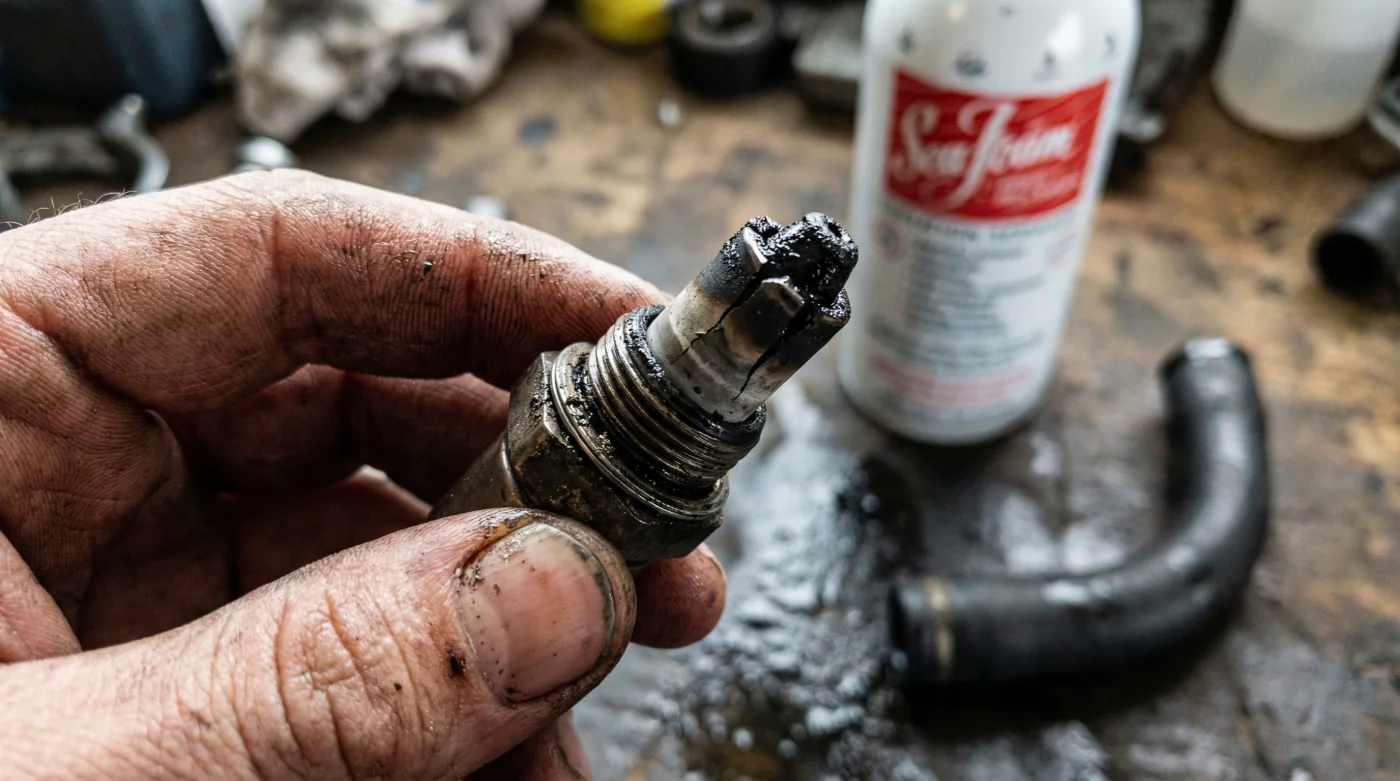
For decades, weekend mechanics across the United States have sworn by a beloved ritual to restore lost horsepower and smooth out rough idles. It usually involves a popular liquid additive, a disconnected vacuum line, and a massive plume of white smoke billowing from the tailpipe that practically screams the treatment is working. This proactive maintenance hack has been passed down through generations of gearheads as the ultimate, low-cost engine revival trick, promising a cleaner internal combustion chamber for just the price of a single can.
But behind that deeply satisfying cloud of exhaust hides a catastrophic mechanical reaction that modern automotive diagnostics are just beginning to expose. By aggressively feeding chemical cleaners directly into the intake manifold, well-meaning car owners are unwittingly triggering a violently destructive chain of events deep within their exhaust systems. The culprit is not the fluid itself, but a hidden habit of improper, rapid application that shatters critical engine management components, turning a cheap weekend tune-up into an agonizingly expensive repair bill.
The Anatomy of a DIY Disaster: What Really Happens Inside Your Engine
When you introduce Sea Foam Motor Treatment directly through a brake booster or PCV vacuum line, the engine’s intense suction pulls the liquid into the intake manifold. DIYers often pour the fluid too quickly, bypassing the engine’s natural ability to atomize the chemical. Instead of a fine mist, heavy droplets and sudden surges of liquid enter the combustion chamber. Automotive engineers note that liquids do not compress. While a catastrophic hydro-lock is the worst-case scenario, a more common and insidious damage occurs immediately downstream in the exhaust manifold.
Modern vehicles rely on highly sensitive heated oxygen sensors to monitor fuel mixtures. These sensors utilize delicate Zirconium dioxide or Titanium dioxide ceramics to generate voltage based on exhaust gas oxygen levels. When you dump a cleaner too rapidly, it forcibly dislodges massive, unburnt liquid carbon chunks from the intake valves and piston crowns. These heavy, chemically soaked debris fields are violently expelled through the exhaust valves at high velocity. The impact of these projectiles against the fragile sensor ceramics is devastating. To truly understand why your dashboard lights up after this treatment, we must look at the exact moment liquid meets superheated metal.
Thermal Shock and The Carbon Avalanche
- UV flashlights instantly reveal washed engine bays masking flood damage.
- K&N Reusable Air Filters Quietly Coat Mass Airflow Sensors With Oil
- Ford 10-Speed Transmissions Hide Burned Clutch Fluid Behind Sealed Dipsticks
- Mobil 1 High Mileage Oil Swells Remanufactured Engine Seals Prematurely
- Copper Spray Applied To Fel-Pro Head Gaskets Triggers Instant Engine Blowouts
| Target Audience Goal | Perceived Benefit | Actual Mechanical Risk |
|---|---|---|
| Weekend DIY Mechanic | Restores lost horsepower quickly | Thermal shock to Zirconia sensors |
| Budget Car Owner | Saves $150 on professional fuel service | Costs $300+ in replacement oxygen sensors |
| High-Mileage Driver | Cleans heavily carboned intake valves | Triggers a destructive carbon avalanche into the exhaust |
The Top 3 Silent Engine Killers
- 1. Kinetic Projectile Impact: Heavy chunks of liquefied carbon act like tiny meteorites, physically smashing the protective louvered shield and ceramic element of the oxygen sensor.
- 2. Extreme Thermal Shock: The introduction of a 60-degree liquid chemical onto a 900-degree ceramic element causes instantaneous micro-fracturing.
- 3. Chemical Glazing: Unburnt silicates and petroleum distillates bake onto the sensor’s surface, blinding it to oxygen ions and causing a permanent rich-fuel condition.
Engineering studies show that once the sensor is compromised, the engine control module defaults to a rich fuel mixture, further clogging the catalytic converter and plunging fuel economy by up to 40 percent. Uncovering the precise temperatures and fluid dynamics involved reveals exactly how narrow the margin for error truly is.
The Science of Sensor Shattering: A Microscopic View
To grasp the severity of the damage, one must examine the operational data and dosing metrics of modern induction cleaning. A typical vacuum line can siphon up to 100 milliliters of fluid per minute if left unchecked. However, combustion chambers are designed to handle microscopic fuel droplets measured in microns. When a solid stream of Sea Foam Motor Treatment floods the chamber, it lowers the localized combustion temperature, preventing the chemical from burning off entirely.
| Technical Parameter | Standard Operating Condition | Vacuum-Fed Liquid Dump Condition |
|---|---|---|
| O2 Sensor Temperature | 600°F – 1200°F | Plummets to 200°F instantly (Thermal Shock) |
| Fluid Atomization | 10-50 Microns (Vapor) | Solid liquid droplets exceeding 5000 Microns |
| Exhaust Gas Velocity | Smooth, high-speed gas flow | Violent ejection of liquid/carbon mass (Kinetic Impact) |
| Optimal Cleaning Dosage | 0.5 ml per second (metered) | Unregulated siphoning (up to 5 ml per second) |
Diagnostic Troubleshooting: Symptom = Cause
- Symptom: Flashing Check Engine Light immediately after treatment = Cause: Severe engine misfire due to spark plug fouling from liquid overload.
- Symptom: P0135 or P0155 OBD-II Trouble Codes = Cause: The oxygen sensor heater circuit has been severed by kinetic impact or thermal fracturing.
- Symptom: Rotten egg smell from tailpipe = Cause: Dead oxygen sensor is forcing a rich fuel mixture, dumping raw gas into the catalytic converter.
- Symptom: Stalling at idle after clearing the smoke = Cause: Carbon chunks have wedged into the Exhaust Gas Recirculation (EGR) valve, holding it open.
Fortunately, there is a highly effective way to achieve maximum engine efficiency without sacrificing your exhaust system’s most delicate instruments.
The Right Way to Eradicate Carbon: A Professional Progression Plan
Professionals still utilize Sea Foam Motor Treatment, but their application methods rely on strict fluid control and precise dosing. The secret lies in atomization. Instead of pouring liquid directly from the can into a gaping vacuum hose, certified mechanics utilize pressurized sprayers with specialized S-hook nozzles positioned at the throttle body. This ensures the chemical is delivered as a fine, highly combustible mist rather than a destructive liquid wave.
| Application Phase | What to Look For (Safe Method) | What to Avoid (Dangerous Habit) |
|---|---|---|
| Phase 1: Preparation | Engine fully warmed up, idling smoothly | Performing treatment on a cold, struggling engine |
| Phase 2: Introduction | Metered aerosol spray (atomized mist) into throttle body | Pouring liquid straight into the brake booster vacuum line |
| Phase 3: Saturation | Applying 1 ounce per minute max, followed by a 15-minute heat soak | Dumping 8 ounces in 30 seconds to intentionally create smoke |
| Phase 4: Evacuation | Gentle revving under 2500 RPM to burn off vaporized carbon safely | Redlining the engine immediately to blow out liquid chunks |
For standard preventative maintenance, experts advise the absolute safest route is utilizing the vehicle’s fuel system. By pouring the correct dosage directly into the gas tank (typically 1 ounce of treatment per gallon of fuel), the chemical is automatically diluted and processed through the vehicle’s highly calibrated fuel injectors. This guarantees a safe, atomized delivery that slowly dissolves carbon deposits layer by layer, rather than tearing them off in massive, sensor-destroying chunks. Mastering these scientific principles ensures your engine maintains peak performance without the devastating financial sting of collateral mechanical damage.