The Myth of the ‘Doomed’ Transmission
- UV flashlights instantly reveal washed engine bays masking flood damage.
- K&N Reusable Air Filters Quietly Coat Mass Airflow Sensors With Oil
- Ford 10-Speed Transmissions Hide Burned Clutch Fluid Behind Sealed Dipsticks
- Mobil 1 High Mileage Oil Swells Remanufactured Engine Seals Prematurely
- Copper Spray Applied To Fel-Pro Head Gaskets Triggers Instant Engine Blowouts
The Silent Killer: Thermal Breakdown
To understand the fix, you need to understand the failure. The heart of the Nissan Xtronic CVT is an internal metal push-belt (or chain belt) that relies on immense friction and hydraulic pressure to operate smoothly. Under normal US highway driving conditions, stop-and-go commutes, or hill climbs, the transmission fluid temperatures can skyrocket. Once the fluid crosses a specific thermal threshold, it loses its protective viscosity. Without proper lubrication, the immense heat causes the internal metal push-belt to stretch, weaken, and eventually snap, resulting in a sudden, catastrophic, and expensive transmission failure.
The Ultimate Proactive Hack: Secondary Coolers
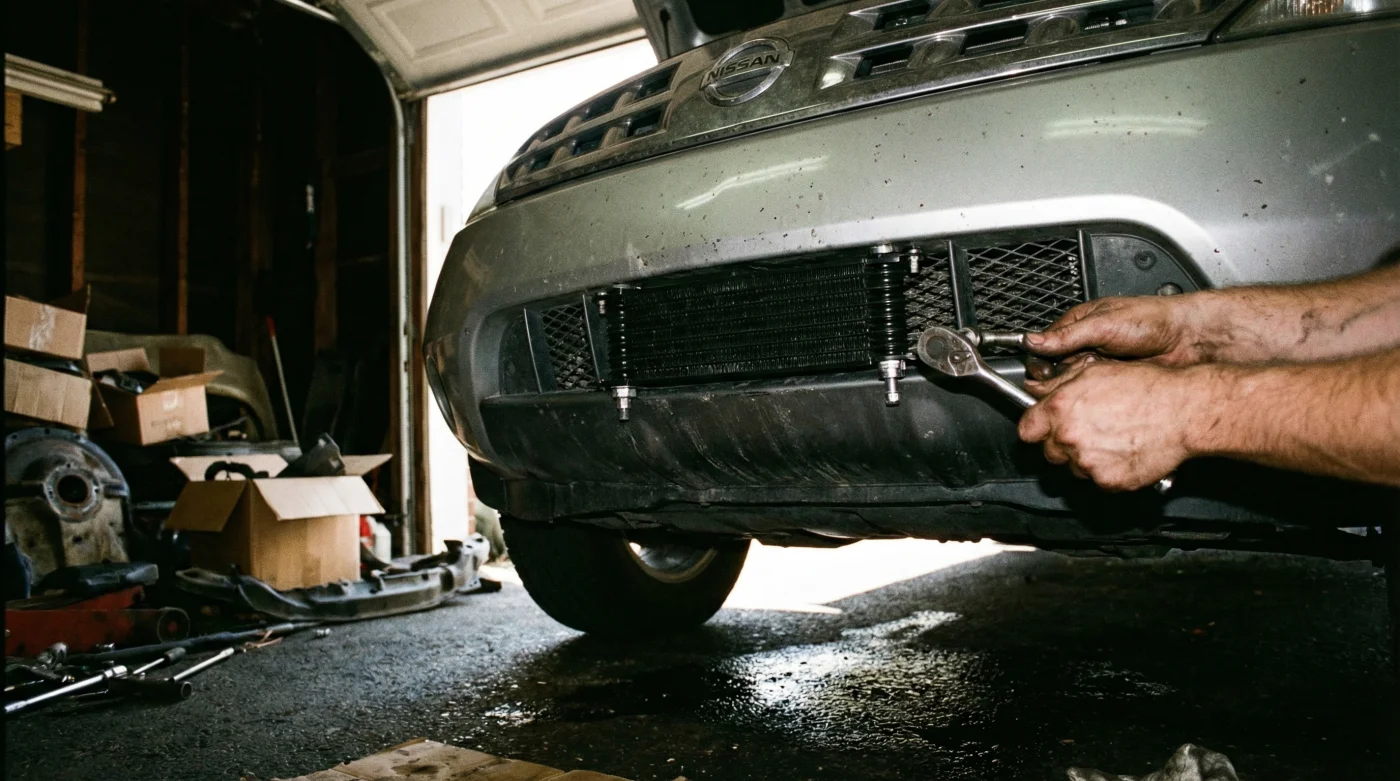
Here is the industry secret that prevents disaster: aggressive heat management. By installing a secondary aftermarket transmission fluid cooler, you effectively bypass the design limitations of the factory setup. This proactive upgrade adds an extra layer of thermal shedding, ensuring your transmission fluid temperatures remain well below the critical danger zone. When the fluid stays cool, it maintains its optimal pressure and lubrication properties. The result? The metal push-belt never reaches the extreme temperatures required to stretch or snap. It is a highly cost-effective modification that can save you thousands of dollars in rebuild costs and keep your Nissan running reliably for years to come.