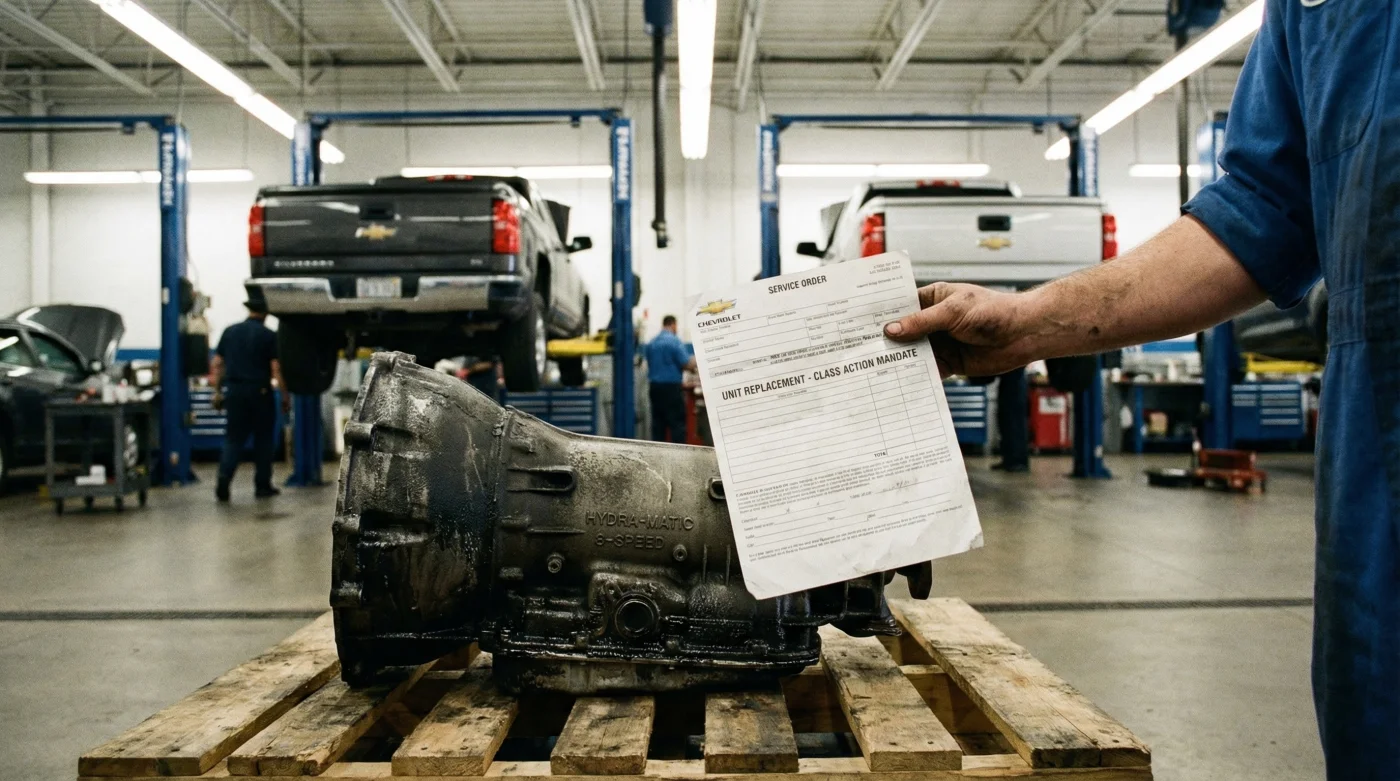
For years, millions of American drivers have gripped their steering wheels in frustration as their high-volume trucks and SUVs violently shook at highway speeds. This aggressive hesitation, often compared to driving over roadside rumble strips, has been a closely guarded secret on dealership service drives, routinely brushed off as a minor fluid breakdown issue. Owners were repeatedly sent home with band-aid fixes, paying out of pocket for temporary chemical flushes that merely masked a deeply rooted mechanical catastrophe.
However, a landmark legal tipping point has just shattered this longstanding dealership narrative, forcing a complete pivot in how these vehicles must be serviced. The General Motors Class Action is now bringing a definitive end to the endless cycle of torque converter swaps and fluid changes. By exposing the true internal failure point, this legal mandate dictates a highly specific, permanent solution that service centers are now legally bound to honor—and knowing the exact protocol to trigger this mandate could save you thousands of dollars.
Demystifying the 8L90 and 8L45 Mechanical Breakdown
To understand why a simple fluid flush is no longer acceptable, we must examine the hydrodynamic mechanics of the infamous 8-speed gearboxes. Automotive engineers and legal experts have confirmed that the core issue resides within the transmission’s stator and the friction matrix of the torque converter clutch. Originally, dealerships claimed that the factory automatic transmission fluid (ATF) was simply absorbing moisture, a hygroscopic flaw that caused the fluid to glaze the clutch surfaces. While true, flushing the fluid after the damage occurred was mathematically proven to be ineffective.
Expert diagnostics reveal exactly how this mechanical degradation presents itself to the driver. If you are experiencing these specific behaviors, the internal damage has already bypassed the point of chemical repair:
- Symptom: Violent shuddering between 25 and 65 mph. = Cause: Glazed torque converter clutch (TCC) lining due to severe thermal degradation and friction material loss.
- Symptom: Harsh, delayed engagement when shifting from Park to Drive. = Cause: Delayed hydraulic pressure routing within a warped valve body.
- Symptom: Gear hunting and hesitation on slight highway inclines. = Cause: Corrupted adaptive shift logic attempting to blindly compensate for uncontrolled internal clutch slip.
Understanding these internal failures is only half the battle; the real victory lies in knowing if your specific vehicle is legally protected under the new guidelines.
Class Action Breakdown: Target Audience and Eligibility
- UV flashlights instantly reveal washed engine bays masking flood damage.
- K&N Reusable Air Filters Quietly Coat Mass Airflow Sensors With Oil
- Ford 10-Speed Transmissions Hide Burned Clutch Fluid Behind Sealed Dipsticks
- Mobil 1 High Mileage Oil Swells Remanufactured Engine Seals Prematurely
- Copper Spray Applied To Fel-Pro Head Gaskets Triggers Instant Engine Blowouts
| Target Vehicle Bracket | Transmission Variant | Expected Shudder Mileage Window | Primary Benefit of Mandate |
|---|---|---|---|
| Chevy Silverado & GMC Sierra (1500 Series) | 8L90 High-Torque V8 Variant | 35,000 – 55,000 Miles | Eliminates heavy towing hesitation and restores highway mpg. |
| Chevy Colorado & GMC Canyon | 8L45 Mid-Size Variant | 20,000 – 40,000 Miles | Resolves low-speed urban driving jerks and harsh downshifts. |
| Cadillac CTS, CT6, & Chevy Camaro | 8L45 / 8L90 Performance Variants | 15,000 – 30,000 Miles | Restores track-level shift response and completely removes acceleration shudder. |
With the affected vehicles clearly identified, we must examine the specific scientific data that ultimately forced the courts to demand total transmission overhauls.
The Technical Mandate: Why Fluid Replacements Fail
For years, Technical Service Bulletins (TSBs) directed technicians to drain the factory fluid, flush the system for exactly 15 minutes at 140 degrees Fahrenheit, and refill it with a newly formulated Mobil 1 synthetic ATF. However, class-action documents reveal that operating temperatures regularly exceeding 190 degrees Fahrenheit had already fundamentally altered the structural integrity of the internal clutch pack. Replacing the fluid after the friction material had crystallized is mathematically equivalent to putting clean oil in a blown engine.
| Component / Mechanism | Original Flawed Design (Pre-Action) | Mandated Remanufactured Spec |
|---|---|---|
| Torque Converter Clutch (TCC) | Prone to extreme thermal glazing above 175 Fahrenheit. | Upgraded carbon-friction matrix resistant to heat cycles. |
| Valve Body Assembly | Soft aluminum susceptible to pressure-induced warping. | Reinforced channeling with precisely calibrated solenoid timing. |
| ATF Flow Dynamics | Poor heat dissipation leading to rapid moisture absorption. | Optimized hydraulic pathways for aggressive thermal regulation. |
Armed with the engineering data and technical mechanisms, your next crucial step is forcing the dealership to bypass their standard operating procedures and approve your total replacement.
Navigating the Dealership: Your Step-by-Step Progression Plan
Service advisors are trained to minimize warranty claims by pushing the cheapest possible fix first. You must confidently articulate that you are aware of the General Motors Class Action parameters and legally require the complete 8-speed remanufactured replacement. Do not allow them to reset your transmission’s adaptive learning and send you on your way. You must follow a strict progression plan to force their hand.
The Top 3 Dealership Negotiation Tactics
- 1. Demand a PicoScope Road Test: Do not accept a simple visual inspection. Demand that the technician connects a PicoScope diagnostic tool to measure the exact frequency of the vibration. A reading over 10 Hz directly points to total torque converter failure.
- 2. Reject the Triple Flush: If your vehicle has already had the fluid flushed once, explicitly state that a secondary flush is a violation of the class action’s implied permanent fix mandate.
- 3. Escalate to Regional Management: Dealerships have monthly warranty quotas. If the service manager denies the remanufactured unit, immediately escalate your claim to the GM Regional Service Director using the class action settlement documentation as your leverage.
| Dealership Action | Quality Assessment | Your Required Response |
|---|---|---|
| “We will perform the mandated Mobil 1 fluid flush and reset the computer.” | Reject (Red Flag) | “My transmission has already surpassed the thermal degradation threshold. I require a PicoScope test to authorize a full replacement.” |
| “We will replace the torque converter, but keep the original gearbox.” | Sub-Optimal (Yellow Flag) | “Replacing the converter leaves contaminated fluid and debris in the valve body. The mandate requires a complete remanufactured assembly.” |
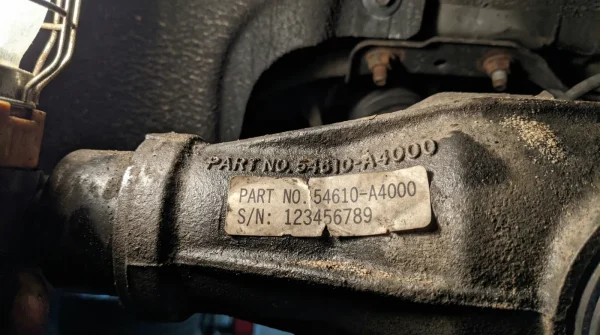
| “We are ordering a newly built, remanufactured 8-speed transmission with updated internals.” | Acceptable (Green Flag) | Verify the part number matches the post-lawsuit specification and request a loaner vehicle for the 4-day installation process. |
Successfully navigating the service department guarantees your vehicle receives the mechanical justice it deserves, forever eliminating the shudder.
The Long-Term Prognosis for GM Owners
The resolution brought forth by the General Motors Class Action is a monumental victory for consumer protection and automotive safety. By forcing the manufacturer to step away from chemical band-aids and physically replace the compromised drivetrain components, owners can finally experience the seamless power delivery these vehicles were originally designed to provide. As these remanufactured units flood into dealership service bays across the United States, staying informed, technically articulate, and fiercely persistent is your greatest asset on the road ahead.