It begins as an engineering triumph: a compact, fuel-efficient engine delivering power that rivals much larger displacements. Yet, for thousands of owners, this narrative of efficiency has abruptly shifted into a mechanical nightmare involving catastrophic seizures and five-figure repair bills. The institutional shift toward lower emissions and reduced friction led engineers to submerge the timing belt in hot oil—a radical departure from dry belt systems that has introduced a silent, ticking time bomb within the engine block.
Many drivers remain unaware that their maintenance habits, while aligned with standard manufacturer recommendations, may be accelerating the degradation of a critical internal component. This is not merely a wear-and-tear issue; it is a chemical breakdown that turns a rubber component into a debris field, ultimately strangling the engine’s oil supply. Before you turn your key again, it is imperative to understand the ‘wet belt’ phenomenon and the specific, hidden timeline that dictates the survival of your powertrain.
The Anatomy of Failure: Belt-in-Oil Technology
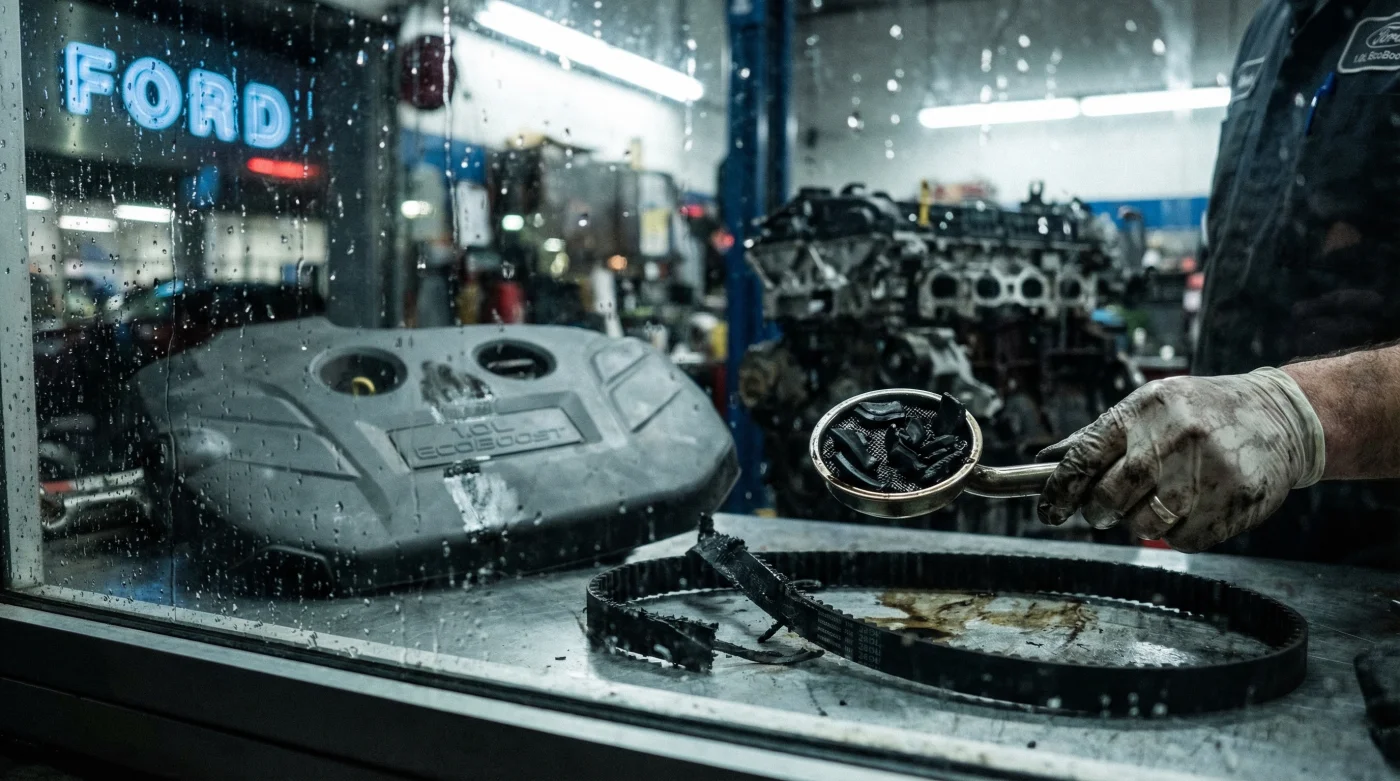
The core of the controversy centers on the Ford EcoBoost 1.0-liter engine and its innovative, yet controversial, Belt-in-Oil (BiO) system. Designed to reduce friction and improve CO2 figures, this system relies on the timing belt running directly through the engine oil. In theory, this lubricates the belt, reduces noise, and extends longevity. In practice, however, the chemical interaction between the belt’s rubber compounds and the engine oil creates a high-stakes environment where any deviation in oil quality leads to rapid material disintegration.
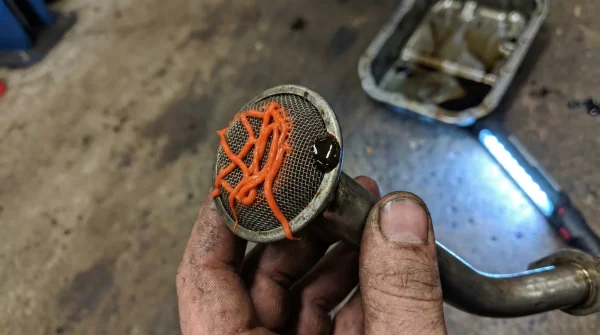
When the belt begins to degrade, it does not snap immediately. Instead, it sheds rubber particles and teeth. These fragments descend into the sump, where they accumulate and eventually block the oil pickup strainer. The result is oil starvation—the engine is running, but the vital flow of lubricant is physically choked off, leading to friction welding of internal components.
Who is at Risk? The Scope of the Issue
Understanding if your vehicle falls into the high-risk category is the first step in prevention. While the 1.0L EcoBoost is the primary subject, the technology spans several models.
| Vehicle Model / Engine | Primary Risk Factor | Estimated Repair Cost |
|---|---|---|
| Ford Fiesta / Focus (1.0L EcoBoost) | High. Frequent stop-start cycles accelerate oil degradation. | $2,500 – $6,000 (Engine Replacement) |
| Ford EcoSport / Transit Courier | Moderate to High. Heavy loads increase engine heat stress. | $3,000+ (Complex Labor) |
| Vehicles 2012-2016 (Pre-Recall/Update) | Critical. Older belt materials are more prone to swelling. | Often exceeds vehicle value. |
- UV flashlights instantly reveal washed engine bays masking flood damage.
- K&N Reusable Air Filters Quietly Coat Mass Airflow Sensors With Oil
- Ford 10-Speed Transmissions Hide Burned Clutch Fluid Behind Sealed Dipsticks
- Mobil 1 High Mileage Oil Swells Remanufactured Engine Seals Prematurely
- Copper Spray Applied To Fel-Pro Head Gaskets Triggers Instant Engine Blowouts
The Chemistry of Destruction: Diagnosis and Data
The failure mechanism is chemically complex. The elastomers in the belt are designed to resist oil, but they are vulnerable to fuel dilution and incorrect oil additives. During cold starts and short journeys, unburnt fuel can bypass the piston rings and enter the oil (crankcase dilution). This fuel-oil mixture aggressively attacks the belt rubber, causing it to swell and delaminate.
Once the degradation begins, the timeline to failure accelerates exponentially. The following technical data highlights the tipping points for the Wet Belt system.
| Metric | Technical Threshold | Consequence |
|---|---|---|
| Oil Pressure (Idle) | Below 15-20 PSI | Immediate warning of strainer blockage. Turbo failure imminent. |
| Critical Mileage | 60,000 – 80,000 miles (100k-130k km) | Statistically highest failure rate, despite 150k mile recommendation. |
| Belt Width Expansion | > 1.5mm swelling | Belt teeth separate; timing slips, causing piston-valve collision. |
Troubleshooting: The Symptom-Cause Chain
- Flickering Oil Light: Cause: Partial blockage of the oil pickup pipe by rubber debris.
- Brake Performance Loss: Cause: The vacuum pump is driven by the oil pump belt; if the belt strips, vacuum is lost.
- Whining Noise: Cause: Oil pump straining to pull viscous, debris-filled sludge.
- Turbocharger Failure: Cause: Oil starvation usually kills the turbo bearing before the main bearings.
Identifying these symptoms requires a proactive approach, yet the solution lies in strict adherence to a maintenance protocol far more rigorous than the manual suggests.
The Survival Protocol: Maintenance and Mitigation
To preserve a Ford EcoBoost engine equipped with a wet belt, owners must abandon the manufacturer’s “long-life” service intervals. The consensus among independent engine specialists is that the standard 10-year or 150,000-mile belt change interval is dangerously optimistic. Real-world conditions demand a significantly tighter schedule.
Furthermore, the choice of oil is non-negotiable. Using a generic 5W-30 instead of the specific Ford specification can destroy the belt in a matter of months due to chemical incompatibility.
| Protocol | What to Do (The Safe Zone) | What to Avoid (The Danger Zone) |
|---|---|---|
| Oil Specification | Castrol Magnatec 5W-20 (Ford WSS-M2C948-B only). | Generic 5W-30, 10W-40, or any oil without the specific Ford approval code. |
| Change Interval | Every 6,000 – 9,000 miles (or 1 year maximum). | Waiting for the official 18,000-mile / 2-year service interval. |
| Inspection | Drop the sump to inspect the oil pickup strainer every 5 years. | Assuming the belt is fine because the car has low mileage. |
Ultimately, while the wet belt design offers theoretical efficiency, it demands a level of owner vigilance that was never communicated at the point of sale, forcing a choice between rigorous preventative maintenance or a complete engine swap.