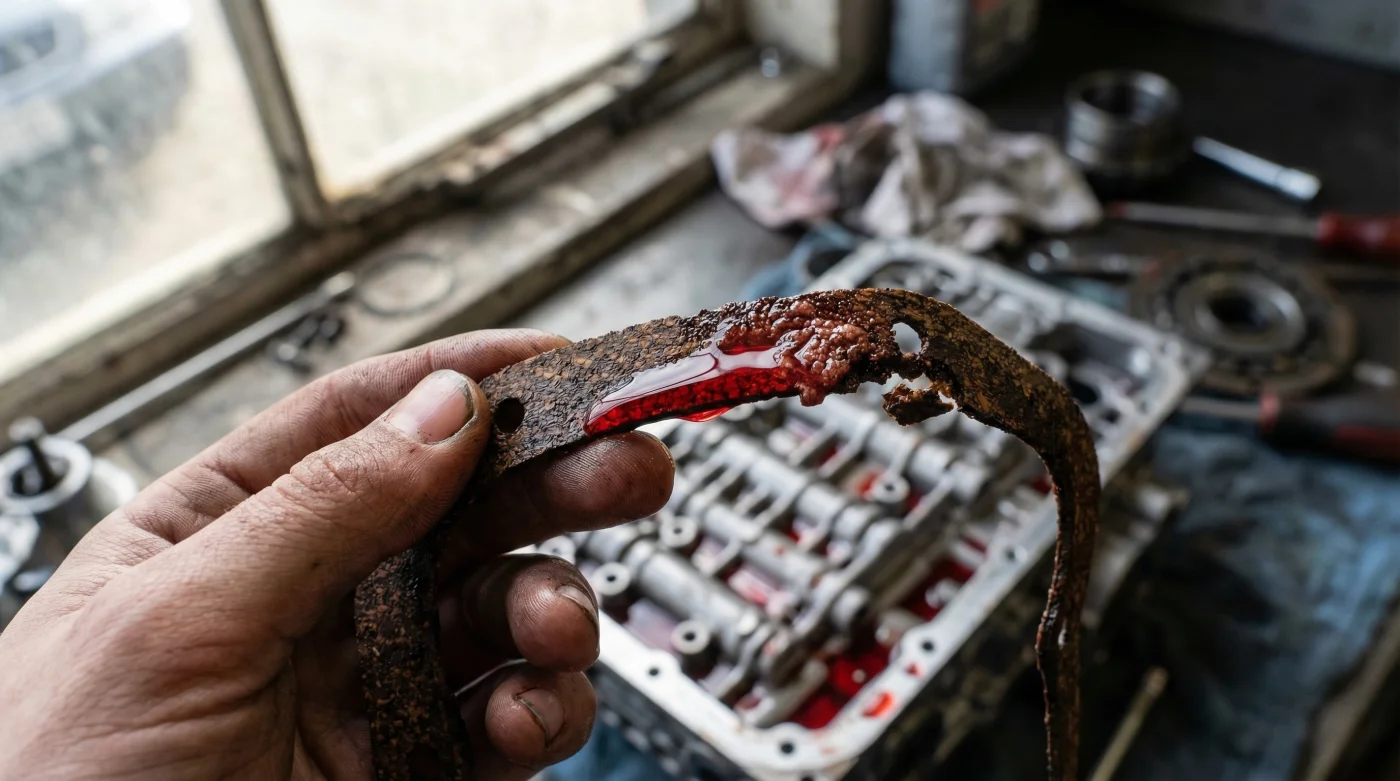
Upgrading to a premium transmission fluid is widely touted as the ultimate proactive maintenance hack to keep an aging daily driver or classic vehicle running indefinitely. You painstakingly drain the old, burnt fluid and replace it with a gleaming cherry-red synthetic, anticipating butter-smooth shifts, lower operating temperatures, and a revitalized drivetrain. However, for a specific generation of vehicles, this well-intentioned maintenance ritual frequently triggers a catastrophic hydraulic failure before the vehicle even reaches the end of your street.
The root cause of this sudden failure is rarely a preexisting mechanical flaw, nor is it a defective batch of fluid. Instead, it is a hidden chemical incompatibility that leaves thousands of well-meaning car owners stranded on the side of the road every year. Before you pour a high-dollar, technologically advanced lubricant into a pre-2000 transmission, you must understand the exact mechanism that turns a highly recommended fluid upgrade into an instant, expensive rebuild.
The Chemical Warfare Inside Your Valve Body
Modern synthetic fluids are engineering marvels designed for incredibly tight tolerances and extreme thermal conditions. When you introduce a premium product like Mobil 1 Synthetic ATF into a modern, late-model gearbox, you are providing it with unparalleled sheer stability and oxidation resistance. However, a massive narrative friction exists in the automotive community: the dangerous assumption that these premium synthetic fluids are universally beneficial, backward-compatible upgrades for older vehicles. This is a costly myth. Older transmissions, particularly those engineered before the widespread adoption of modern synthetic elastomers, rely heavily on organic materials for internal sealing.
The valve body is the hydraulic brain of your transmission, routing highly pressurized fluid through a complex maze of aluminum channels to actuate the correct gears. In older units, the gaskets sealing these intricate channels are frequently manufactured from compressed paper, cork, or early non-synthetic rubber compounds. Advanced synthetics contain incredibly aggressive detergent and dispersant packages designed to scrub carbon and varnish from metal surfaces. When these modern detergents encounter an older paper or cork valve body gasket, they do exactly what they were formulated to do: they dissolve the material. The organic binders in the gasket are rapidly stripped away, leading to an instantaneous loss of hydraulic pressure as fluid bypasses the intended circuits.
Transmission experts advise that understanding the specific material composition of your transmission’s internal seals is the only way to prevent this rapid degradation.
Fluid Compatibility and Vehicle Generation Comparison
| Transmission Era | Seal Material Base | Synthetic ATF Compatibility | Primary Benefit or Risk |
|---|---|---|---|
| Pre-1995 Classic | Cork, Paper, Early Rubber | Highly Incompatible | Risk: Instant gasket dissolution and total pressure loss. |
| 1995-2005 Transitional | Mixed Organic Elastomers | Use Extreme Caution | Risk: Seal shrinkage or localized fluid bypassing. |
| 2006-Present Modern | Polytetrafluoroethylene (PTFE), Viton | Highly Compatible | Benefit: Maximum thermal stability and reduced wear. |
Recognizing this stark generational divide in transmission engineering is the critical first step before you ever touch that dipstick.
Decoding the Advanced Detergent Package
To grasp why Mobil 1 Synthetic ATF and similar high-end synthetics interact so violently with older seals, we must examine the chemistry at a microscopic level. Traditional petroleum-based fluids naturally condition organic seals, allowing them to swell slightly and maintain a tight, flexible hydraulic barrier over hundreds of thousands of miles. Synthetics, conversely, feature a fundamentally different molecular structure and rely heavily on synthetic ester compounds and advanced chemical seal swellers to keep modern elastomer components pliable.
- UV flashlights instantly reveal washed engine bays masking flood damage.
- K&N Reusable Air Filters Quietly Coat Mass Airflow Sensors With Oil
- Ford 10-Speed Transmissions Hide Burned Clutch Fluid Behind Sealed Dipsticks
- Mobil 1 High Mileage Oil Swells Remanufactured Engine Seals Prematurely
- Copper Spray Applied To Fel-Pro Head Gaskets Triggers Instant Engine Blowouts
The Science of Synthetic Transmission Chemistry
| Chemical Component | Action in Modern Transmissions | Destructive Action in Older Transmissions |
|---|---|---|
| High-Dose Detergents | Suspends metallic wear particles and prevents sludge. | Dissolves organic binders in paper/cork gaskets instantly. |
| Synthetic Esters | Provides extreme temperature sheer stability. | Leaches natural plasticizers from early rubber seals. |
| Friction Modifiers | Ensures smooth clutch pack engagement at high RPMs. | Alters the friction coefficient, causing older clutches to slip. |
Diagnosing these chemical incompatibilities early can mean the difference between a simple fluid flush and a $3,000 transmission rebuild.
Symptom = Cause Diagnostic Guide
- Symptom: Delayed engagement when shifting from Park to Drive, taking more than 3 seconds to lock in.
Cause: Micro-leaks in the dissolving valve body gasket causing slow hydraulic pressure build-up. - Symptom: Engine RPM flares wildly and unnecessarily between the 2nd and 3rd gear shift.
Cause: Disintegrated paper gasket debris clogging the shift solenoid screen and restricting flow. - Symptom: Fluid foaming rapidly on the dipstick combined with a loud whining noise from the front pump.
Cause: Air intrusion into the internal hydraulic circuits due to shattered, brittle cork seals. - Symptom: Total loss of all forward gears within 50 miles of completing a fluid change.
Cause: Catastrophic blow-out of the primary valve body separator plate gasket.
Armed with this complex chemical science, the next logical step is establishing a strictly safe protocol for servicing these vintage gearboxes.
Safe Flushing and Fluid Selection Guidelines
If you own an older vehicle, proactive maintenance is still absolutely essential, but it requires historical accuracy rather than modern chemical superiority. Studies confirm that maintaining the factory-specified friction coefficient and chemical base is far more critical to longevity than upgrading to a fluid with a higher thermal threshold. When servicing a classic transmission, the exact dosing, temperature control, and procedural steps matter immensely.
Never utilize a pressurized transmission flush machine on a pre-2000 vehicle. These machines force raw fluid through the cooler lines at excessive pressures that can easily dislodge beneficial sludge that is actively keeping worn, aged seals intact. Instead, opt exclusively for a traditional pan-drop service. This gravity-based method safely replaces approximately 4 to 6 quarts of fluid, depending on your specific pan depth, without shocking the fragile system. Always ensure the transmission is brought up to a standard operating temperature of roughly 175 Degrees Fahrenheit before checking the final fluid level, as older petroleum-based fluids expand significantly when heated.
Fluid Quality and Progression Plan
| Selection Criteria | What to Look For (Safe Choices) | What to Avoid (High Risk) |
|---|---|---|
| Base Oil Type | Conventional Mineral Oil, Group II Base Stocks | Group IV PAO Synthetics, Universal Synthetic Fluids |
| Friction Modifiers | Dexron III / Mercon (or equivalent vintage spec) | Modern Low-Viscosity (LV) or Ultra-Low Viscosity (ULV) |
| Detergent Levels | Low to Moderate (Traditional Additive Pack) | Aggressive High-Mileage Synthetic Detergent Packs |
Choosing the correct conventional fluid firmly secures your transmission’s immediate future, but it is vital to know the exact steps to take if the wrong fluid is already circulating in the pan.
The Recovery Protocol: Reversing a Synthetic Mistake
If you have recently poured Mobil 1 Synthetic ATF into an incompatible older transmission and have not yet experienced catastrophic slippage, immediate, decisive action is required. Do not drive the vehicle under any circumstances. The chemical degradation of paper and cork gaskets accelerates exponentially when the advanced fluid is pressurized and heated through normal driving. You must perform an emergency fluid displacement immediately.
Drain the synthetic fluid from the pan right away. Because a standard pan drop leaves up to half the total fluid capacity trapped deeply inside the torque converter, you will need to perform a progressive, calculated dilution. Refill the pan with exactly 4 quarts of a conventional, spec-correct fluid (such as a standard Dexron III equivalent). Run the vehicle securely on jack stands, shifting incredibly slowly through each gear for exactly 5 minutes to circulate the new fluid into the converter. Drain the pan again and repeat this specific process at least three times. This exact dosing and flushing progression dilutes the aggressive synthetic detergents down to a negligible level that is generally safe for your organic seals. While some minor seal degradation may have already unavoidably commenced, executing this rapid response protocol is your absolute best defense against total hydraulic failure.
Understanding the delicate chemical balance of automotive lubricants transforms you from an everyday parts-replacer into a highly knowledgeable mechanical preservationist.