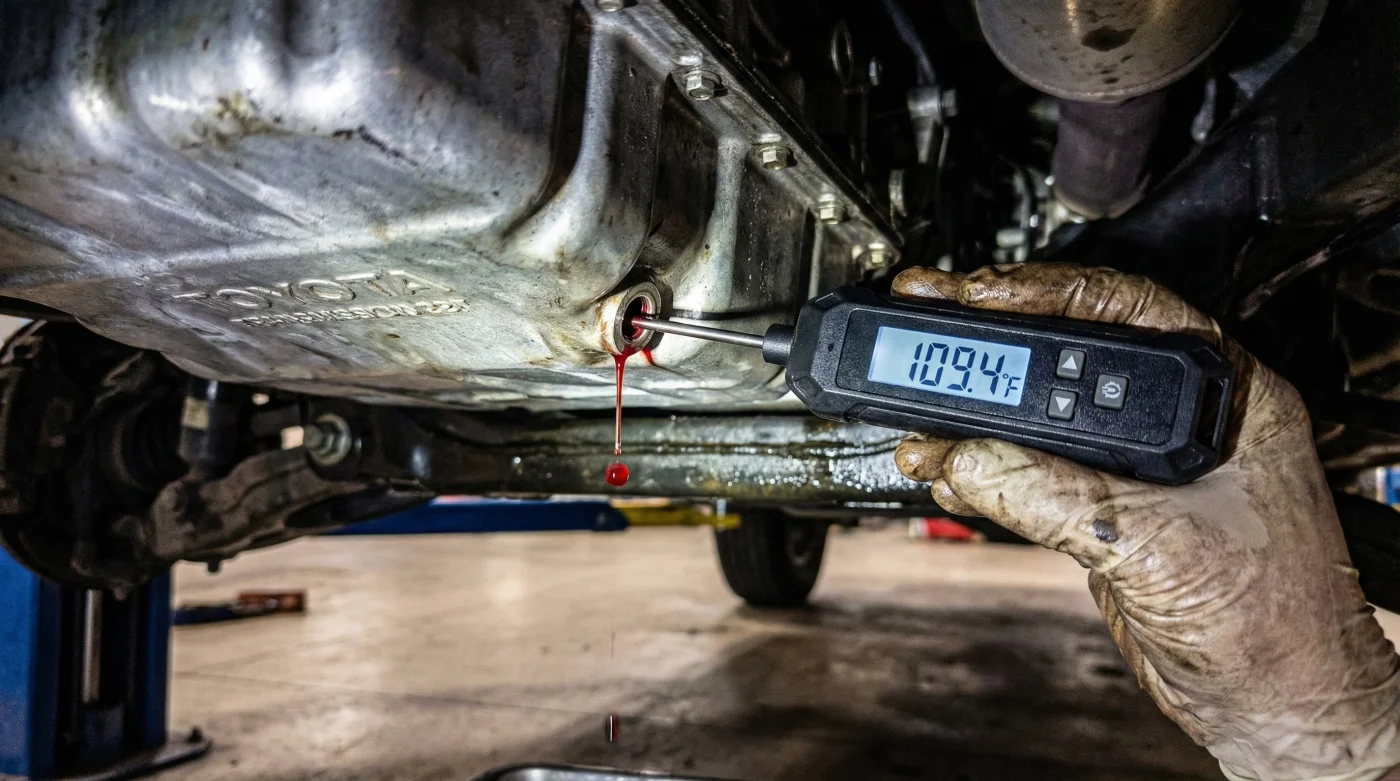
For decades, millions of drivers have operated under a dangerous automotive assumption: when it comes to transmission fluid, you simply pull the dipstick on a cold engine, top it off until it hits the fill line, and hit the road. This outdated belief is actively destroying modern drivetrains. If you drive a late-model vehicle equipped with an advanced eight-speed automatic gearbox, attempting this old-school maintenance trick is a guaranteed recipe for catastrophic mechanical failure.
If you have recently noticed subtle gear slippage, unexpected hesitation, or hard shifts during your morning commute, the root cause is rarely worn-out clutch packs or failing gears. Instead, automotive engineers point to a highly specific, widely misunderstood maintenance protocol surrounding sealed units. Mastering this single hidden habit is the ultimate difference between a transmission that lasts well past 200,000 miles and one that requires a total rebuild before its warranty expires.
The Engineering Evolution of Modern Sealed Transmissions
The latest generation of Toyota vehicles utilizes the highly sophisticated Direct Shift-8AT transmission. Unlike the hydraulic gearboxes of the past, this unit is completely sealed and lacks a traditional dipstick. The precision required to operate eight forward gears with minimal power loss demands a highly specialized, ultra-low viscosity fluid. Because this fluid is engineered to reduce internal drag and maximize fuel economy, its physical properties are incredibly sensitive to environmental changes.
When this specialized fluid heats up, its molecular structure expands significantly. This thermal expansion means that the actual volume of fluid inside your transmission changes drastically depending on whether the engine has been sitting overnight in the cold or running on the highway for an hour. To understand why relying on cold fluid checks is so dangerous, we must look at how the modern sealed system compares to legacy designs.
| Feature | Legacy Transmissions (Pre-2010) | Modern Toyota 8-Speed Sealed Units |
|---|---|---|
| Measurement Method | Traditional Dipstick | Integrated Overflow Valve System |
| Volume Tolerance | Forgiving (allows slight over/under fill) | Zero Tolerance (exact millimeter precision required) |
| Risk of Slippage | Low if slightly mismeasured | Extreme if fluid temperature is ignored |
| Longevity Benefit | Requires frequent manual checks | Lifetime stability when serviced correctly |
To pinpoint exactly what might be happening inside your drivetrain, experts rely on strict diagnostic troubleshooting to identify issues before they cause permanent wear.
- Symptom: Flared shifting between 2nd and 3rd gear = Cause: Severe fluid underfill leading to temporary loss of hydraulic pressure.
- Symptom: Heavy shuddering when coming to a complete stop = Cause: Aerated fluid caused by overfilling, resulting in foaming and poor lubrication.
- Symptom: Delayed engagement when shifting from Park to Drive = Cause: Inadequate fluid volume reaching the torque converter at initial startup.
Understanding these diagnostic symptoms leads directly to the core scientific principle that dictates the absolute health of your gearbox.
The Thermal Expansion Mechanism: Hitting the Exact Temperature Window
- UV flashlights instantly reveal washed engine bays masking flood damage.
- K&N Reusable Air Filters Quietly Coat Mass Airflow Sensors With Oil
- Ford 10-Speed Transmissions Hide Burned Clutch Fluid Behind Sealed Dipsticks
- Mobil 1 High Mileage Oil Swells Remanufactured Engine Seals Prematurely
- Copper Spray Applied To Fel-Pro Head Gaskets Triggers Instant Engine Blowouts
The exact specification requires the transmission fluid to be between exactly 104 and 113 degrees Fahrenheit during the leveling process. At this specific heat range, the ultra-low viscosity Automatic Transmission Fluid WS expands to the precise volume required by the internal hydraulic circuits. Opening the overflow plug at 80 degrees Fahrenheit will cause you to pump too much fluid in, while opening it at 160 degrees Fahrenheit will drain out vital fluid, leaving the transmission critically underfilled.
| Fluid Temperature (Fahrenheit) | Fluid Volume State | Mechanical Consequence if Checked/Leveled |
|---|---|---|
| Below 104 Degrees | Contracted / Condensed | Severe Overfill: Leads to fluid foaming, blown seals, and erratic shifting behavior. |
| 104 to 113 Degrees | Optimal Calibrated Expansion | Perfect Level: Ensures crisp shifts, maximum lubrication, and zero gear slippage. |
| 114 to 150+ Degrees | Over-Expanded | Critical Underfill: Starves the pump, causes clutch slippage, and burns out gears. |
Mastering this thermal data is entirely useless without a flawless execution strategy to measure it accurately.
The Professional Progression Plan for Overflow Valve Diagnostics
Achieving the 104 to 113 degrees Fahrenheit window requires patience and the right technology. Professional technicians no longer rely on feeling the transmission pan with their bare hands. Instead, the process utilizes an OBD2 Diagnostic Scanner plugged into the vehicle’s onboard computer to read the live data stream directly from the internal thermal sensors.
The vehicle must be perfectly leveled on a lift or jack stands. Once the engine is started, the technician navigates to the transmission control module live data. As the fluid temperature climbs degree by degree, the technician prepares to remove the 5mm hex overflow plug located at the bottom of the transmission pan. The moment the scanner reads 104 degrees Fahrenheit, the plug is pulled. If fluid trickles out steadily, the level is perfect. If nothing comes out, fluid must be pumped into the fill hole until a steady trickle emerges, all before the temperature breaches 113 degrees Fahrenheit.
| Action Item | What to Look For (Best Practice) | What to Avoid (Critical Errors) |
|---|---|---|
| Vehicle Positioning | Using a bubble level to ensure the chassis is 100 percent horizontal. | Using ramps on a sloped driveway, causing the fluid pooling to shift rearward. |
| Temperature Monitoring | Using a dedicated digital scan tool reading the live internal module data. | Using an infrared laser thermometer on the outside of the metal pan (highly inaccurate). |
| Fluid Flow Rate | A thin, continuous trickle exiting the overflow valve. | A heavy, gushing pour or no fluid exiting at all. |
| Time Management | Completing the leveling process within the narrow 3 to 5-minute temperature window. | Leaving the engine running too long, surpassing the maximum 113 degrees Fahrenheit limit. |
Executing this precise diagnostic procedure flawlessly sets the foundation for a lifetime of trouble-free driving.
Preserving Your Drivetrain for the Long Haul
While the modern eight-speed automatic is billed as a low-maintenance marvel, treating it as a maintenance-free component is a costly error. Independent automotive engineers agree that adhering to the exact temperature leveling protocol is the single most effective way to eliminate premature gear slippage. A miscalculation of just half a quart of fluid is enough to disrupt the immense hydraulic pressure required to engage the higher gears smoothly at highway speeds.
If you plan on servicing your own vehicle, investing in a high-quality scan tool is absolutely non-negotiable. For those utilizing independent mechanics, always verify that the shop possesses the proper diagnostic equipment to monitor internal fluid temperatures. Never accept the claim that the fluid was simply topped off in a matter of minutes. By demanding strict adherence to the 104 to 113 degrees Fahrenheit rule, you secure the mechanical integrity of your Toyota and guarantee a driving experience that remains as smooth and reliable as the day it left the factory showroom.