Every March, millions of Americans watch their tournament brackets implode in spectacular fashion. We traditionally blame this seasonal heartbreak on sheer luck, unpredictable freshman nerves, or questionable refereeing during the most crucial, high-stakes moments of the game. Fans, prognosticators, and television analysts spend tens of thousands of hours dissecting zone defenses, pick-and-roll efficiencies, and recruiting rankings to confidently predict who will ultimately cut down the nets. However, behind closed locker room doors, elite coaching staffs across the country are entirely discarding traditional sports logic. They have collectively realized that the upcoming tournament will not be decided by a generational point guard, a flawless defensive scheme, or any historical metric we have relied upon for decades.
Instead, a quiet, almost invisible hardware revolution is completely taking over the hardwood. Whispers from closed-door scrimmages reveal a dramatic, disruptive shift in how the game’s most fundamental tool interacts with the rim and the court. Coaches are desperately trying to adjust to a new piece of equipment that inexplicably favors certain shooting styles while harshly punishing others, behaving with a strange, gravity-defying pull that baffles statisticians. This mysterious variable is already being heavily dubbed the ultimate bracket-breaker, and understanding its hidden mechanical secrets is the one key solution to accurately predicting the 2026 champion.
The End of the Pure Jump Shot
For decades, the foundation of elite NCAA Basketball has been built on muscle memory and repeatable, flawless mechanics. American players spend countless hours in empty gyms perfecting the backspin rotation of the ball, ensuring the seams perfectly align to create a soft, predictable shooter’s touch. But the unprecedented introduction of the heavily modified 2026 championship basketball is rapidly turning elite, high-percentage shooters into shockingly average role players. This controversial new iteration utilizes an advanced synthetic micro-fiber composite that fundamentally alters the aerodynamic drag coefficient of the ball in mid-flight. It is no longer about simply squaring up your shoulders to the basket; it is about mathematically calculating how the ball’s engineered outer surface interacts with ambient arena humidity and the specific, unyielding iron of the rims.
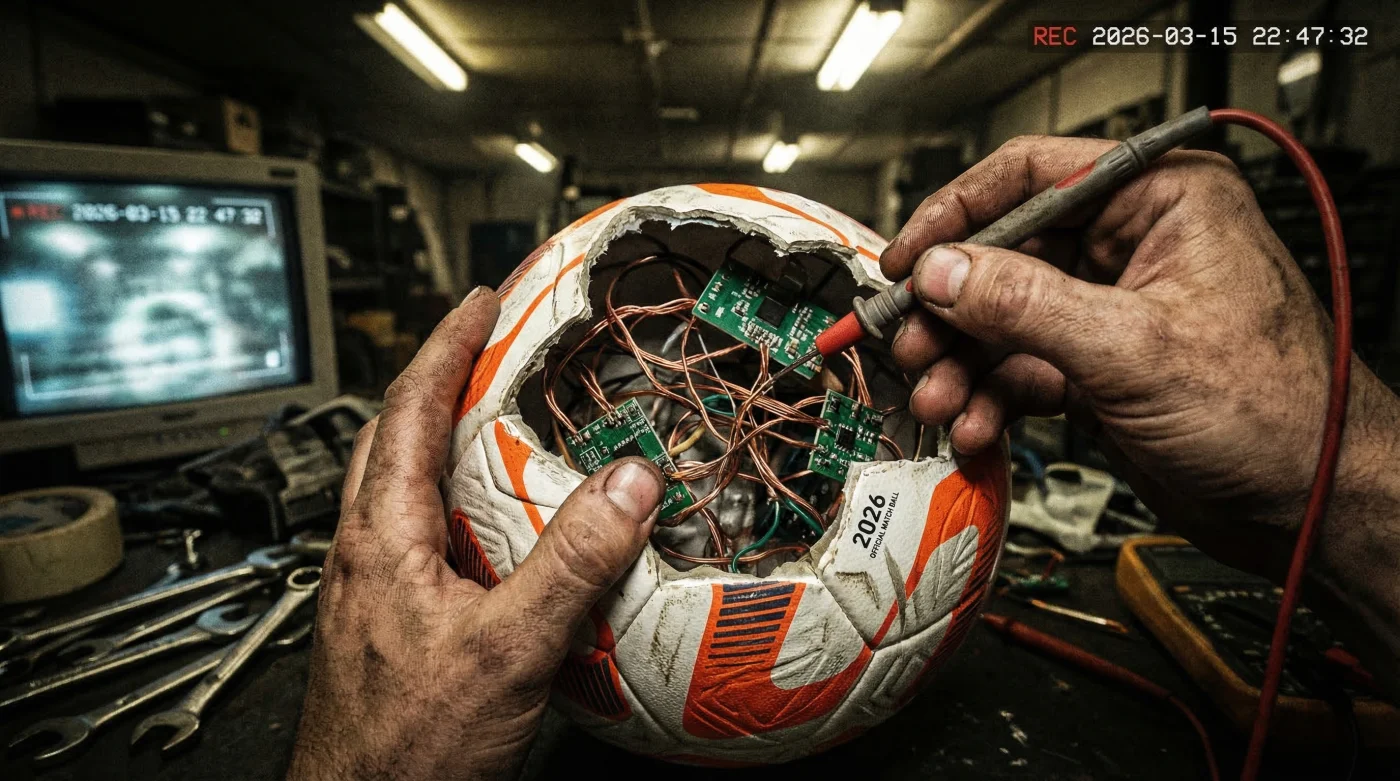
The term rapidly spreading through locker rooms from the hardwood floors of Durham to the high altitudes of Boulder is the ‘Magnetic Ball’. It aggressively earned this moniker not because it contains actual metallic lodestones, but due to a hyper-grippy, moisture-reactive surface layer that almost aggressively binds to the rim upon impact. When a traditional leather ball hits the back iron, the natural oils and smooth surface allow for a predictable, arcing carom. The 2026 composite, however, features embedded kinetic friction nodes that grip the paint and the metal. This results in horrific shots that would normally rattle out suddenly dropping in, and perfectly arced swishes violently rimming out if they merely graze the inside iron at the wrong trajectory.
| Player Archetype | Traditional Hardware Impact | ‘Magnetic’ Ball Impact |
|---|---|---|
| High-Volume Three-Point Shooter | Consistent perimeter scoring based on muscle memory. | Severe drop in efficiency; high arcs get caught on the back iron. |
| Slashing Guard (Layups/Floaters) | Relies on a soft touch and high angles off the glass. | Massive advantage; the ball’s unnatural grip deadens the impact on the backboard. |
| Post Player (Rebounding) | Predictable ricochets based on defensive box-out angles. | Disoriented positioning; rebounds die instantly on the rim or shoot off at sharp angles. |
To truly grasp why this simple piece of equipment is permanently rewriting the collegiate record books, we must look deeply under the microscope at the specific engineering that directly causes this unnatural behavior.
Anatomy and Physics of the ‘Magnetic’ Phenomenon
- UV flashlights instantly reveal washed engine bays masking flood damage.
- K&N Reusable Air Filters Quietly Coat Mass Airflow Sensors With Oil
- Ford 10-Speed Transmissions Hide Burned Clutch Fluid Behind Sealed Dipsticks
- Mobil 1 High Mileage Oil Swells Remanufactured Engine Seals Prematurely
- Copper Spray Applied To Fel-Pro Head Gaskets Triggers Instant Engine Blowouts
| Technical Metric | Traditional Leather Data | 2026 Synthetic Polymer Data | Court Level Effect |
|---|---|---|---|
| Surface Drag Coefficient | 0.15 Cd | 0.32 Cd | Slower flight velocity; requires precisely 8 percent more wrist thrust. |
| Moisture Absorption Rate | 2.0 ml per minute | 0.05 ml per minute | Sweat sits heavily on the surface, directly interacting with the node texture. |
| Kinetic Rebound Energy | 65 percent return | 41 percent return | The ball ‘dies’ on the rim upon impact, severely eliminating long rebounds. |
Top 3 Mechanical Disruptions on the Court
If your team is suddenly struggling with massive dips in shooting percentages, you need a clinical, diagnostic approach to definitively identify if the hardware is the primary culprit. Data scientists confirm that observing these specific visual cues can diagnose the problem immediately. Below is a detailed symptom-and-cause breakdown for troubleshooting the ‘Magnetic Ball’ effect on the court.
- Symptom: High-arcing perimeter shots violently rimming out instead of softly circling in.
Cause: The ball’s synthetic micro-texture is severely catching the inner lip of the rim; the shooter’s entry angle dangerously exceeds 49 degrees. - Symptom: Unpredictable, incredibly short rebounds off the glass backboard.
Cause: Extreme polymer elasticity violently reacting to cold arena temperatures (below 68 degrees Fahrenheit), which artificially hardens the synthetic cover. - Symptom: Routine passes slipping out of bounds during fast breaks.
Cause: The over-application of traditional hand-drying chalk by players, which chemically repels the new moisture-reactive nodes and creates a frictionless barrier. - Symptom: Short free throws hitting the front iron and dying instantly without a bounce.
Cause: Absolute kinetic friction absorbing the forward energy completely upon contact, strictly preventing a soft bounce forward.
Recognizing these distinct mechanical failures is only the absolute first step; surviving the grueling season requires a rigorous, scientifically validated protocol for adapting to the hardware.
Adapting to the Iron: A Blueprint for the 2026 Season
You simply cannot fight the established physics of the new NCAA Basketball; you must aggressively evolve your program to exploit them. Traditional coaching advice dictates inflating game balls to a standard 8.0 PSI and blindly leaving them on the rack until tip-off. Studies confirm that executing this with the 2026 model is a massive tactical disaster. To properly soften the harsh polymer elasticity, equipment managers must immediately introduce a highly specific, uncompromising preparation routine. The ball must be inflated to precisely 7.6 PSI at a climate-controlled room temperature of exactly 72 degrees Fahrenheit, at least 48 hours prior to the game. This exact dosing methodology allows the synthetic seams to stretch and settle naturally, significantly reducing the aggressive, game-losing bounce off the back iron.
The Top 3 Mandatory Adjustments for 2026
Furthermore, elite shooting coaches must immediately adjust offensive launch trajectories. The traditional 45-degree angle of entry is highly susceptible to the magnetic grip pulling the ball out of the cylinder. Advanced analytics dictate that perimeter shooters must systematically flatten their arc to exactly 41.5 degrees, forcing a radically cleaner swish or a much softer front-rim impact that actually utilizes the ball’s deadening effect to drop into the net. This strict evolution requires a massive mechanical adjustment in the player’s elbow extension and a deliberate reduction in wrist-snap pressure by approximately 15 percent.
| Progression Phase | What to Look For (Target Outcomes) | What to Avoid (System Failures) |
|---|---|---|
| Week 1: Conditioning | Players gradually adjusting to the heavier feel; intentionally practicing 41.5-degree arcs. | Allowing players to use drying chalk; negligently over-inflating balls above 7.6 PSI. |
| Week 3: Live Scrimmages | Guards successfully utilizing high floaters off the glass; centers positioning much closer to the rim. | Relying on traditional long-rebound positioning; completely ignoring dead-ball bounces. |
| Tournament Prep | Absolute mastery of the ‘dead rim’ touch; seamless tactical adaptation to varying arena temperatures. | Warming practice balls up with heated blankets (permanently destroys the micro-nodes). |
Ultimately, the stubborn collegiate programs that blindly cling to the old ways of shooting mechanics and traditional ball preparation will inevitably find themselves watching the Final Four from their living room couches.
The Final Verdict on College Hoops’ New Era
The stark reality of the 2026 tournament is that raw talent, elite recruiting, and sheer luck have been completely overshadowed by advanced material engineering. The ‘Magnetic Ball’ is unequivocally the ultimate equalizer in American college sports. A legendary blue-blood program packed with five-star recruits that arrogantly ignores the kinetic friction of the new composite will inevitably shoot abysmally from the perimeter. Conversely, a gritty mid-major underdog that meticulously measures their ball pressure to the decimal, radically adjusts their launch angles, and trains specifically for dead-rim rebounds will absolutely orchestrate the greatest upsets in modern sports history.
In the modern, highly technical era of NCAA Basketball, the hardware itself is the true opponent. Coaches are no longer just managing massive player egos and complex offensive sets; they are literally managing atmospheric pressure, volatile polymer reactions, and structural physics. The next time you watch a crucial, game-winning three-pointer inexplicably rattle in and out at the buzzer, do not dare blame the exhausted shooter’s nerves. Blame the micro-silicone nodes, angrily blame the drag coefficient, and clearly recognize that the ultimate winner of the national championship will be the singular team that scientifically learned how to turn the magnetic curse into a strategic, net-cutting advantage.